Bathing in nature

I was scanning social media the other day—that essential in an author’s toolkit—when someone mentioned winter sneaking around the corner. The writer was in the northern hemisphere, so for them winter is ahead. My initial response was—ah, open fires, doonas, hot chocolate, adoring companions, snuggling down in the corner of a sofa to read, or looking up from your typewriter to see snow flurries somersault across the park. Even while I was weaving dreams, I suspected the reality was wet shoes, cold toes, frozen fingers, slippery footpaths, zero visibility, grumpy strangers, lost scarves, coats past their use-by-date, and all manner of inconveniences.

It’s winter now in Australia. I’m usually in my cosy home in temperate Sydney during the winter months, but recently I spent a week in a farm-stay in central NSW. A hideaway in the bush, sustainably run and beautifully presented. A large main room combines kitchen, living and bedroom, and the whole is warmed by an open wood fire. The fridge and stove mean you can haul in supplies for a week and cook anything you’d like or make at home. The bathroom’s at the back, but the cottage’s best feature is a stunning wide, full-length veranda stretching across the front. It overlooks bushland and a river and is the perfect place to soak up the heat and eat, read, or write on a sunny day. Bliss.

Revelling in the isolation, I was also reminded that you need the right clothes to stay warm in any cold climate; that in this vast Australian continent you can often be out of range of internet and phone services; that if the pipes freeze, you’ll curse yourself for not having filled the water kettle the night before. A hot drink to start the day looms as an essential. And someone needs to check if the fire needs another log at 3 am, so you’re not on your knees at 6 am trying to blow a flicker into a flame.

Intense cold is also a reminder that being in an extreme situation—mental, emotional and physical—can exhaust your capacity to function properly. If you can, call time-out—from social media, from people who are taking and not giving in return, from a space where you can’t breathe, can’t think. Walk around the block. Look at the sky. Pat an animal.

For me, the week was both time-out and renewal, about listening to the wind in the trees, seeing sunlight play across a slow-moving river, inhaling that earthy scent that comes after rain, spotting patterns in river rocks and the trunks of trees. I also solved some knotty plotting problems from a camp chair tucked among the trees with fairy wrens dancing around me. And I was lucky enough to experience some random acts of kindness—it wasn’t me doing the 3 am wood run to keep our cottage toasty warm.

I know Planting Hope has just been released, but thinking ahead—my next book, Lela’s Choice, another standalone contemporary romance, is due out before Christmas. It’s set in sunny, windy Malta. Find out more from the My Books section of my website.

Find me on

You can also send me a message via the contact link on this site. Looking forward to hearing from you.

Writing Planting Hope

Story ideas come from a gazillion sources, a snippet of conversation, a news item, a photograph, an interview, a memory. The core of Planting Hope came from a friend. She was passionate about gardens, about permaculture, about rain tanks, and native bees, about growing vegetables and surrounding them with flowers, but equally she believed in the healing power of gardens—working in them or just being in them.

A few years before her death at a young age from a rare disease called Antisynthetase, she commissioned a landscape architect to redesign her smallish front suburban yard using permaculture methods. He incorporated used items into his designs, such as old cement tubs, bits of wire, or mirror fragments. He encouraged creepy-crawly things, using nesting boxes, and hiding places for animals or insects to create habitat along with beauty. My friend used to sit in it for a while when she arrived home, a space between work and home, a space that allowed her to clear her mind and replenish her spirit. A place of healing bare metres from a busy road. She proved that was possible to me.

That was my starting point. But who would I invite into this special garden.

I researched the use of healing gardens. There’s an enormous amount of literature on what’s called horticulture therapy. “Many studies show that after a stressful event, images of nature very quickly produce a calming effect. Within three to four minutes after viewing nature scenes, blood pressure, respiration rate, brain activity, and the production of stress hormones all decrease and mood improves.”

Sensory gardens make a difference. Gardens that engage the senses of sight, smell, touch, taste, and sound. Colour is important; places to sit are important. The type of garden you choose might be based on whether or not you’re working with children, people dealing with grief, people with disabilities, people with dementia or older people.

So many goods flow from working in gardens. For a start plants don’t judge you. You can

  • develop a sense of responsibility
  • engage with other living things
  • lift your happy hormones—exposure to green spaces has been proven to cause a dip in the levels of the stress hormone cortisol, which controls moods, memory and immunity
  • be rewarded when your plants grow or you harvest a herb or food
  • build exercise into your day
  • learn to work with others.

I was starting to see possibilities. I went down rabbit holes and found myself in a labyrinth. I found a clue in the statement: you need to be destructive to be constructive in a garden. Paydirt!

There seems to be an epidemic of family abuse and violence in Australia, with a woman killed on average every week by her partner or former partner (2021). While many people devote their lives to helping victims, the scars are intergenerational. Could gardening help the children of these families to heal?

That’s the idea I’m exploring with Planting Hope. Carefully, because I’m writing romance. I’d love to know if you enjoyed my book.

Find me on

You can also send me a message via the contact link on this site. Looking forward to hearing from you.

Mothers

Today is Mother’s Day in Australia—14 May 2023, so let’s celebrate mothers. Where would we be without them? Happy Mother’s day to my mum. Note: the woman in the photo is not my mum, but a much-loved ancestor.

Now for my confession. Mother’s Day has made me reflect on how mothers appear in my books.

Unfortunately, too often in novels, mothers can be plot devices, used to set up a particular story—wicked witch, kindly soul, cipher, siren, competitor, collaborator, destroyer of dreams, or creator of hope. Regardless, they have a huge impact on the lead protagonists either though their presence or absence. And I don’t mean actual presence or absence in the book. They can loom without ever appearing on the page or uttering a word.

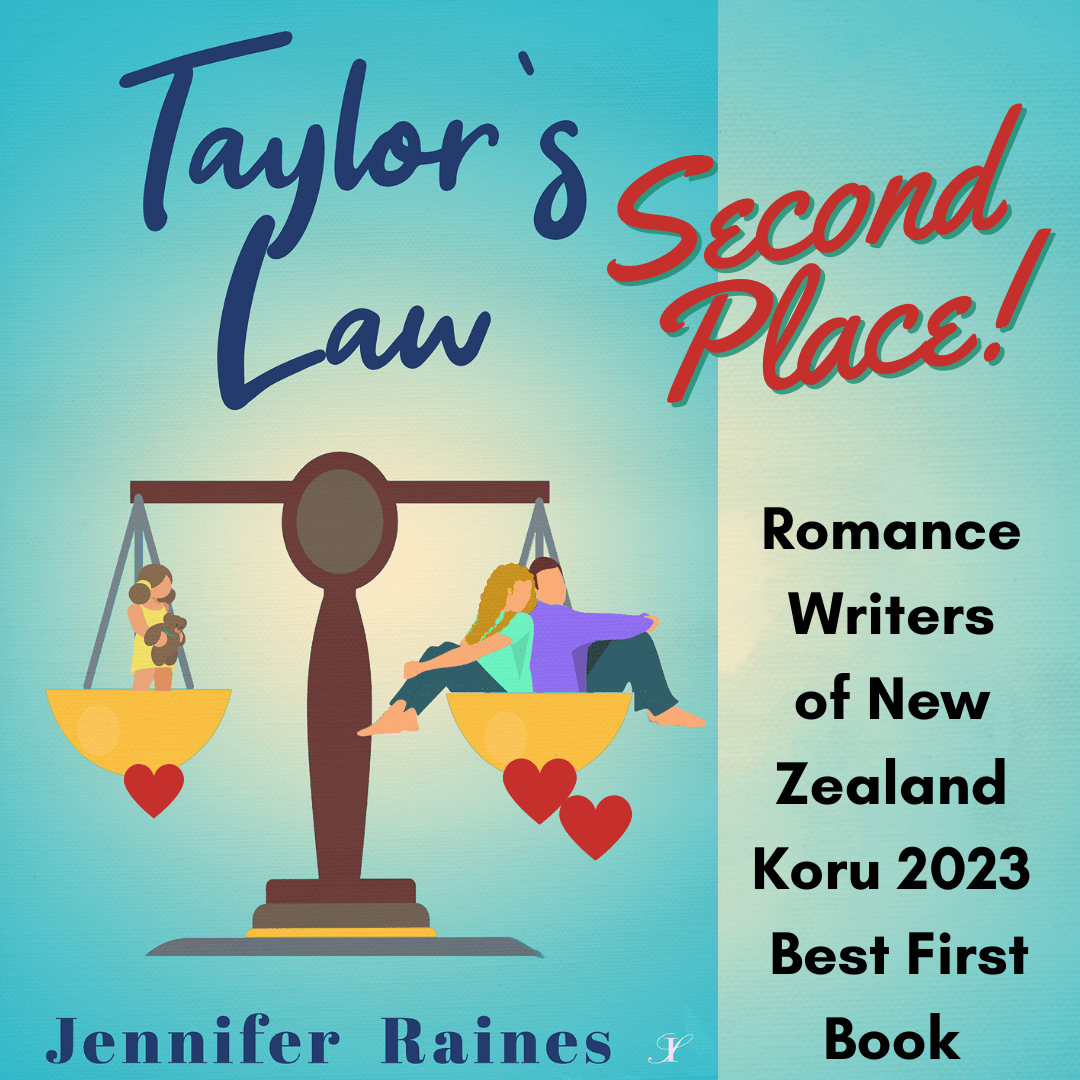
In Taylor’ Law & Grace Under Fire—The Anderson Sisters, Ella and Grace’s mother is a wonderful woman, who had a tractor accident some years ago and has struggled with her health since. Her health is her defining feature. Her husband borrowed money to pay for her medical care, and in turn was swindled out of prime farmland in exchange for the debt. The impact this has had on her daughters’ choices is significant, especially their ability to trust. Ella left university to help with caring, but also to provide extra income for her family. Her passion is justice. Grace’s passion is the family farm, and she’s determined not to lose another acre. There are also two mothers who died before the books open, a third who’s made mistakes, and a fourth is a single mother who struggled to make ends meet.

See how cavalier I am with mothers.

In Planting Hope, July 2023, mothers are largely invisible. Invisible in the sense that only one physically appears in the book. But mothers are omnipresent because a theme is how gardening can help children dealing with the impact of domestic violence. Planting Hope does include a tart, no-nonsense grandmother who’s irresistible.

Lela’s Choice, December 2023, has two main protagonists. Lela’s beloved mother died young, while I’m pleased to announce that Hamish’s mother is alive and kicking, and mentioned, as is his whole family, very positively.

2024 brings my next series – Choosing Families. You can guess from the series title that some of the characters might be less than satisfied with the family members they were born with. Talking about mothers can trigger nightmares or the deepest love and everything in between.

Oh dear! Rest assured love does conquer all, and there’s plenty of lightness to be found in my books. Also friendship and passion in the twists and turns.

Find me on

You can also send me a message via the contact link on this site. Looking forward to hearing from you.

Editing Planting Hope

Breaking news: the winner of the March 2023 giveaway is Elita M, Queensland, Australia. Congratulations Elita.

I was sweating on edits for Planting Hope. I’ve already published two books with Inkspell Publishing, Taylor’s Law and Grace Under Fire—The Anderson Sisters, and developed a good working relationship with my editor. For Planting Hope, I was assigned a new editor and wasn’t sure what to expect. Everything was up for grabs again.

There are broad categories for the edits any book needs:

With thanks for definitions of the types of editing to publicly available advice from Tucker Max, Scribe Media & The Institute of Professional Editing & conversations with writing colleagues.

  • developmental editing occurs early in the process and helps you to organise your ideas, get the structure right, and make sure the book works. You can have this conversation without a finished book
  • evaluation or structural editing is still at a high level, looking at plot, structure, pace, characterisation, viewpoint, and narrative
  • with content editing you’re starting to get paragraph markups, pointing out errors or concerns in flow, construction and grammar, whether your voice is consistent, and the tone is right for your intended audience
  • line editing does what it says, looks at each line in your book to see if the words you choose tell the reader what you want them to know. A line editor might tighten your prose, identify clichés, and fix wonky sentences
  • copyediting is about spelling, punctuation, grammar mistakes, and making sure your book follows the relevant style guide—essentially UK or US English. Copyediting polishes your book to a shine
  • proofreading comes after your book has been professionally formatted; the last chance to pick up any errors.

Some editors combine the first three under the heading substantive editing. Other editors combine content and line editing.

So, there was I sweating on what my new editor might suggest. For the moment, I’d completely forgotten that I’d done a helluva lot of editing before submitting this manuscript to Inkspell Publishing.

I entered multiple competitions including competitions for the first 1,500 words, for the first chapter, for a synopsis, for the full manuscript, and even for the first kiss. I got good, bad, and constructive feedback and suggestions about areas for improvement, including layering of back story, characterisation or deep POV; even suggestions for online courses with different teachers I might learn from. I took some. For the first kiss competition, I was the readers’ choice at the end of the first round. I didn’t win that comp, but having readers choose me was a great incentive to keep working on the manuscript.

In 2019, I asked Lauren Clarke CREATINGink https//:www.creatingink.com for a beta report, a high-level report addressing plotline, characterisation, location and setting, and overall writing style.

When I won the 2019 NZ Pacific Hearts competition with Grace Under Fire, I chose to use my prize, a full edit by NZ editor, Lesley Marshall https://www.editline.com.nz for Planting Hope.

In 2020, I asked V I Peace for a content edit, email v@vipeace.ca or through her website www.vipeace.ca

My new editor has provided her edits—nothing worrisome in plot, pacing or characters, more a focus on a copy or line edit. So, I can thank a lot of people for getting me here. This edit has made me re-examine my manuscript differently and identify new areas for improvement, a better word choice, a shift in dialogue.

I so want this baby to succeed. There are a few reasons, but that’s a story for another day.

Find me on

You can also send me a message via the contact link on this site. Looking forward to hearing from you.

The Anderson Sisters-Giveaway

In March last year, I’d barely begun my writer’s journey. I was feeling my way. I’m still feeling my way, but I’ve learnt a lot.

Things that have changed between then and now?

  • Taylor’s Law & Grace Under Fire (The Anderson Sisters) are published, available as e-books and paperbacks, and I’ve received some truly lovely reviews
  • I have publishing dates for four more of my books in 2023 (Planting Hope—July & Lela’s Choice—December) and in 2024 I start new series—Choosing Family (March & July)
  • I’m now on Instagram, and that’s a challenge when I’m more about what you see is what you get rather than glitz and glamour
  • juggling writing, promoting my work, working on covers, editing for contracted books, and simply living has become a more complicated enterprise. Just what is the right balance?

Things that haven’t changed?

  • I’m enriched and encouraged by the support of my loved ones, other writers and readers
  • I never get tired of hearing someone say they love one of my books, be it an editor, publisher, reader, or competition judge
  • I still need technical advice on the pitfalls of social media and Judy L Mohr remains a constant source of useful information. I started with Judy’s guide Hidden Traps: A Writer’s Guide to Protecting Your Online Platform, and continue to get useful information via  her blogs Black Wolf Editorial Services
  • I value V I Peace’s advice on content—for me that’s about improving the beginnings of my books, identifying if the internal/external conflicts are believable and will carry the story, consistency of characterisation and deeper POV. V provides feedback on shorter or longer excerpts depending on the content issue I’m seeking to resolve. I doubt if Masquerade (Inkspell Publishing, March 2023—Choosing Family, Book 1) would have made it to press, if it hadn’t been for V’s incisive, direct, but always constructive feedback. And I wanted that book to work. You can contact V by email v@vipeace.ca or through her website www.vipeace.ca

GIVEAWAY: To mark my first year I’m giving away a copy of Taylor’s Law & Grace Under Fire (The Anderson Sisters) to a new subscriber to my website before 20 April 2023.

Australia—paperback or e-book (winner’s choice); International—e-book.

Find me on:

You can also send me a message via the contact link on this site. Looking forward to hearing from you.