A hopeful spring

September 1 marks the beginning of spring in Australia.

It was the best of times, it was the worst of times, it was the age of wisdom, it was the age of foolishness, it was the epoch of belief, it was the epoch of incredulity, it was the season of Light, it was the season of Darkness, it was the spring of hope, it was the winter of despair, we had everything before us, we had nothing before us, we were all going direct to Heaven, we were all going direct the other way.

(Charles Dickens, A Tale of Two Cities, 1859, bk.1, ch.1)

When I look at the world at the moment, everything Dickens said makes sense.

Except everything is different because we are all ourselves, and we experience each moment based on our physical, mental and emotional well-being at that precise second.

Can I put food on the table? Am I healthy? Do I have secure housing? Am I financially stable? Am I safe? Are my loved ones safe? Am I loved? Am I valued in my workplace, among my peers and in my home? Do I have something to look forward to? This loosely translates to Maslow’s hierarchy of needs where survival is the most basic need and being able to achieve your full potential is at the highest level. And in today’s world a lot of people are struggling to meet the needs that matter most to them.

But I digress.

I started this blog because it’s spring, because the quality of the light has changed, the length of days has changed, and the sounds I’m hearing have changed. There’s more colour and variety in the garden, the native bees have come out to play, and the noisy miners are dive-bombing the cats, who roar in protest and the dance starts over.

More people are on the streets. They seem to be smiling more and their smiles are wider, toothier. They’re shucking jackets and scarves with breezy abandon and revealing tantalising stretches of skin that have been buried beneath layers of cloth for months. They’re lolling about on blankets in parks, pretending to read a book while dozing in the sun. Children are running for the sheer fun of wind through their hair. Lovers are holding hands, exchanging secret glances or starting to weave dreams.

All the delicious elements that make spring add up to a sense of joy and possibilities. I’m hugging the sense of possibilities close and starting a new story.

In last month’s blog I reflected on Pamela Cook’s session at the #rwaus2022—Climb Inside Your Character’s Skin. That’s how I’m spending my thinking time at the moment—trying to get inside the head of my new characters and see, hear, feel, think and experience the world as they do. What are their challenges? Do they have regrets? What are their dreams?

Dylan Thomas set the scene for Under Milkwood (1954) with his opening words: To begin at the beginning. It is spring, moonless night in the small town, starless and bible-black.

P.S – my dendrobium orchid is almost white this year when it’s usually a pale buttery yellow.

Finding your tribe

It’s an expression you’ll hear at romance writers’ conferences. You sigh with relief knowing everyone in the room is on a similar wavelength. You can talk freely. And if you ask what a “danger bang” is, someone will give you a straight answer—sex when the situation is perilous. Pick your own peril.

So what did I learn at Bedtime Stories, the 2022 Romance Writers of Australia conference?

Multi-published USA Today bestselling author of contemporary romance Zoe York’s keynote reminded us that you gain one reader at a time; the author journey is a marathon not a sprint, and that each new reader can be introduced to your backlist. That’s if you have a backlist—I’m working on creating one!

Pamela Cook—Climb Inside Your Character’s Skin—challenged us to watch two skiing videos—one backed by mood music, the other containing the raw sounds the downhill skier could hear—to get inside the head of the character and see, hear, feel, think and experience the world as they were. The takeaways were as different as the conference participants—for me video 1 was mellow, relaxed, almost playful whereas video 2 was gritty, adrenalin-charged with high stakes.

Kristine Charles delivered a fabulous session—Let’s Talk about Sex, which was entertaining, informative and challenging, reminding us that sex needs to be both safe and consensual in modern romance. How does intimacy prompt the protagonists to make new and different choices? Readers don’t want the IKEA conundrum—insert Part A into Slot B; instead they want to be in “the emotional gooey centre”.

Dr Jodi McAlister’s laugh-aloud session was about The Perfect Date, inviting us to define a date and dating, then pushing us to think about the goal of a first date, a second date, a failed date and our reaction to these. Are we reacting with our hearts, our heads or our bodies? Or is tonight the night to Netflix and chill—aka—watch Netflix with a romantic prospect, with the eventual expectation of sexual activity.

I know I attended an excellent session with Amanda Kendle—Polishing and Strategising your Online Presence, and I know many in that audience were light years ahead of me in understanding and using the various platforms available to writers. All I can do at this stage is promise to think about it all and get back to you.

Maisey Yates, New York Times bestselling author of more than 150 Mills and Boon novels, gave an inspirational closing keynote. It’s impossible to do justice to it in a few words, but she finished by providing 13 lessons she’s learned in her thirteen years as a published author. Key takeaways for me were—ideas are cheap; execution is what counts—only writing teaches you how to write—you can fix crap; you can’t fix a blank page—staying published is harder than being published—failure is to be expected.

So, it was the right decision to hop a plane and travel to Fremantle. An in-person conference introduces you to like-minded people, to opportunities to learn and grow, and reminds you of the dedication and generosity of fellow romance writers—in this case the passionate volunteers with RWAustralia who organised this conference. Thank you RWA.

Writing Taylor’s Law

A farmer’s daughter, with no passion to work the farm

A swindle igniting a passion for justice

A toddler—mother dead, father unknown

An Australian Broadcasting Corporation (ABC) news team—reporter, pilot and cameraman—killed in a fatal helicopter crash in Lake Eyre during a routine assignment

A man whose private homage to his father includes sporting a ponytail and an earring

Some fact, some fiction. Add wealth, power, greed, envy balanced by compassion, loyalty and love and ignite with passion and imagination.

What’s the starting point of a book?

For me, the initial trigger may be a single incident, like the helicopter crash. It appears in a scrolling news ticker on your screen—appearing—disappearing, yet so many lives are impacted by this event in small and monumental ways.

Who takes responsibility for the child or children left behind when a single parent dies? Who wins if there are credible conflicting claims?

Stories are born of other stories, the layers built slowly and carefully so the initial inspiration is woven invisibly into the fabric of the new tale. Stories take time, research, planning and endless revision—at least for me.

You give your new tale to trusted readers, who point out the implausibility of an action, the inconsistency of another, an annoying characteristic you’ve assigned a major player, tell you that you’ve been too abrupt in a change of scene or left hanging an unanswered question.Perhaps, if you knew at the beginning how many hours of work were required to unearth that little tale you might have left it buried in the jumble of your imagination. Sometimes the challenges make me more determined to tell the story well, to convince the reader my idea has merit. I can’t let it go. Sometimes I set it aside for months or years—I haven’t yet succumbed to the notion of forever. Sometimes, my days are pure joy.

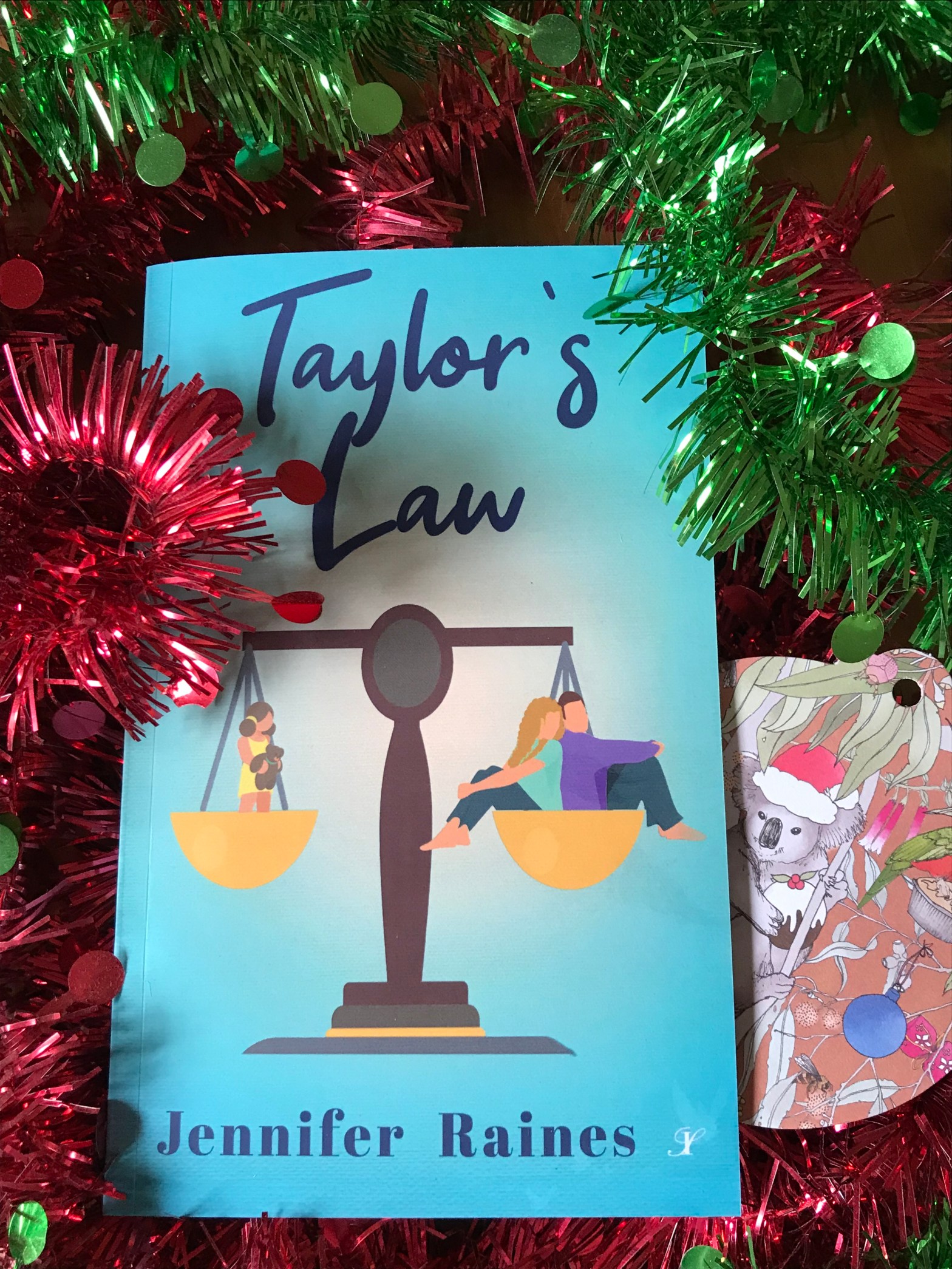
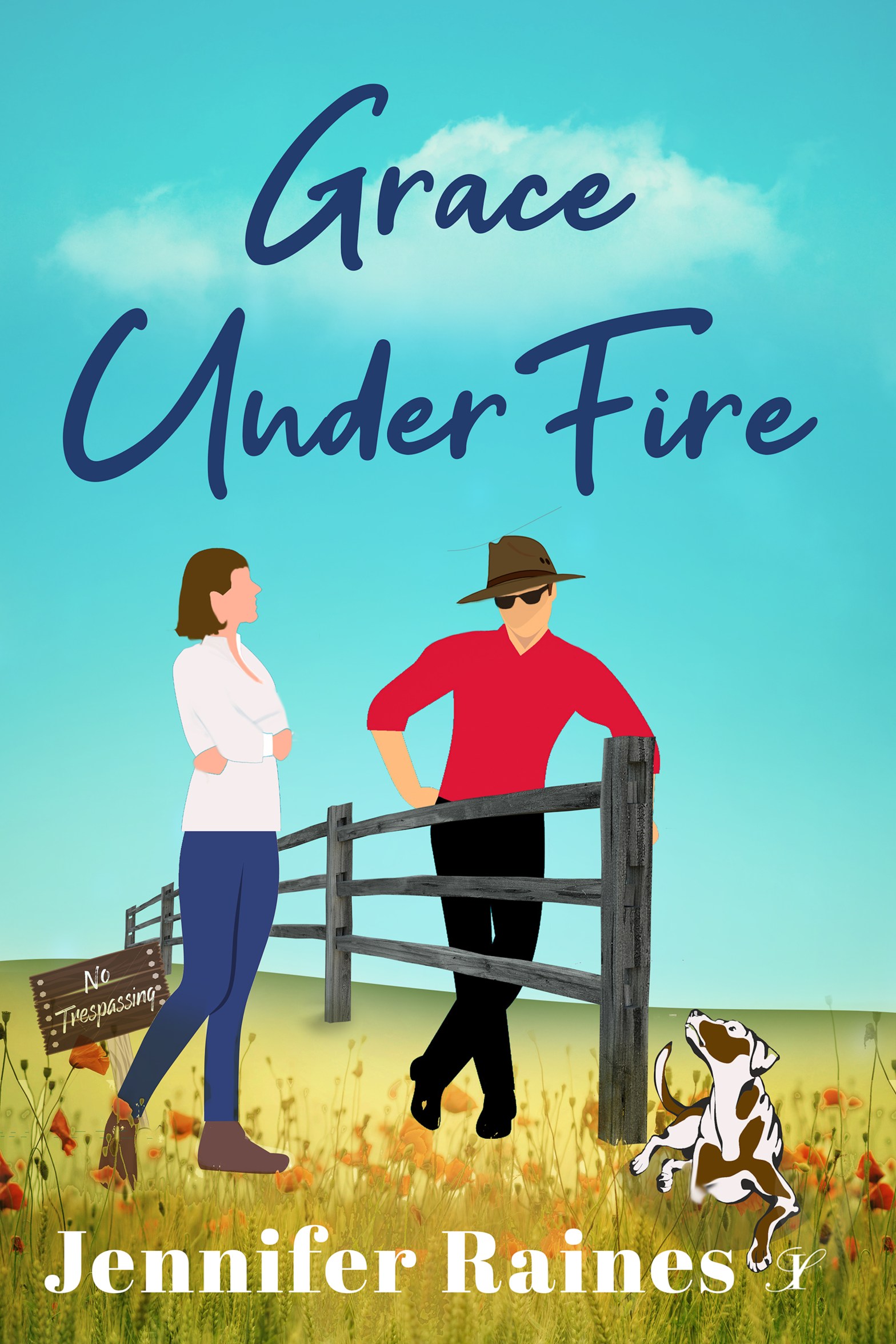
You’ll have to wait until March 2023 for Ella’s sister’s story—Grace under Fire, but you’ll find an excerpt at the back of Taylor’s Law.

Self-Confidence?

First printed in May 2022 HeartsTalk, the newsletter of Romance Writers of Australia (reprinted with permission).

Every time I enter a competition I think, ‘this is it’.

I play with the idea that I final, and then I win, and then I deal with the acclaim. I’m modest. I admit to anyone who’ll listen—it’s taken time, I’ve worked hard. Then reality bites. I don’t final, so I don’t win.

Does that mean I’m not good enough to be published? Should I find another passion? Be true to yourself, the pundits say, write the kind of books you like to read.

Supportive friends insist you are good enough—why don’t you self-publish? Because I’m not remotely interested in self-promotion, social media and web pages. I want a publisher to do some of the work for me. Now, that is a problem because every publisher these days, large and small, requires their authors to take a hand in self-promotion and creating a brand. That’s a bullet you will have to bite. And perhaps I’m late to this party.

Sometimes after a knock back or two from publishers you tuck your manuscript in the bottom drawer and move on the next potential bestseller.

And all these elements—the tough but fair competition critique, the critique from the reader who clearly doesn’t get your style and makes sure you know it, the rejection from the editor who likes the premise, or the characters, but hates the presence of too-much-back-story-too-soon, or thinks you should try another publisher—combine to deflate your confidence. Self-confidence—that feeling of trust in one’s abilities, qualities, and judgement. Words like self-possession, composure, poise, even nerve can be lost.

In 2020 I nerved myself to contact a competition judge. She’d given me a very encouraging wrap where others had scored me poorly, and I asked, through the competition coordinator, if the judge would be prepared to speak to me. I was thrilled when she said yes. More thrilled when I discovered Bronwyn Hall had won the Emerald in 2019 and was happy to share her approach with me. She sent her manuscript to every suitable publisher she could find and sold it. I’d sent my third place 2018 Emerald manuscript to one or two then stored it away with the hand-knitted winter socks.

Encouraged, I had another look at my manuscript, applied the skills I’ve been learning in the last few years and submitted to a US competition. I finaled—didn’t win—still the editor was interested in the full manuscript. Inkspell Publishing contracted my book Taylor’s Law and it’s due for release in July 2022. Inkspell has since contracted for the second book in the two-book series, Grace Under Fire—2019 Pacific Hearts Winner, which will be published in March 2023.

And a third stand-alone book Planting Hope, publication date July 2023. I’m both thrilled and apprehensive about the next steps, but I intend to take them.

I’ve written for years, had long gaps forced by workload or life or disappointment, but I couldn’t stop writing. I wish now I hadn’t taken those breaks. To be honest, part of the reason I stopped was also because colleagues and some family members bad-mouthed romance, not knowing I was writing romance. I couldn’t imagine telling them I was a romance author. In those years I toyed with the idea of a pseudonym. Now I’m using my own name, but protecting my privacy by using a graphic image to represent me, rather than an actual photograph, and limiting my social media exposure until I learn more.

A conversation with a stranger, a fellow member of RWA, and my confidence was boosted enough for me to risk another rejection on a manuscript I’d abandoned. So talk to people who share your passion for writing. They’re generous with their knowledge and support. Dreams can come true.

Jennifer will be at the 2022 RWA Fremantle Conference and is happy to chat. She’s also a finalist in the 2022 Emerald competition.

Playing fair is romantic

I’ve been thinking about this recently because I find that I return to this idea again and again in my writing. It matters whether my main characters are treating others fairly as well as whether my characters are being fairly treated.

This shouldn’t be a surprise. Research suggests that almost from birth, toddlers recognise the importance of treating others fairly—of the value of respecting rules. Kids notice unequal treatment. Kids who play fairly with each other enjoy the experience more, and if kids get along well together they have a greater sense of belonging. Belonging helps you grow and thrive.

As we get older, fair play becomes a constant in life—competitive sport, the creative arts, education, work, any field of endeavour you care to name. If competition is fair and participants are treated equally it means you are judged on your efforts. Winning is based on your merits not on some rigged system or deceptive trick—think hobbling a competitor in a match or stealing someone’s idea or taking credit for someone else’s work. I’m with you screaming from the sidelines—“that’s not fair”.

Fair play is an aspect of integrity—a fine quality for any self-respecting character. Teaching people tolerance and respect for others can build better relationships and help individuals and communities recognise injustice and inequality; the opposite is conflict and division.

Fair play is essential to romance. Intimate relationships need give and take to survive, need both partners to contribute and compromise.

I know, I know. Exact fairness in any relationship is impossible. We each have our own ideas about what fairness is. However, if you consistently make the effort to be fair across all dimensions of the relationship, relationships tend to flourish. At least that’s what my characters tell me.