It’s an expression you’ll hear at romance writers’ conferences. You sigh with relief knowing everyone in the room is on a similar wavelength. You can talk freely. And if you ask what a “danger bang” is, someone will give you a straight answer—sex when the situation is perilous. Pick your own peril.
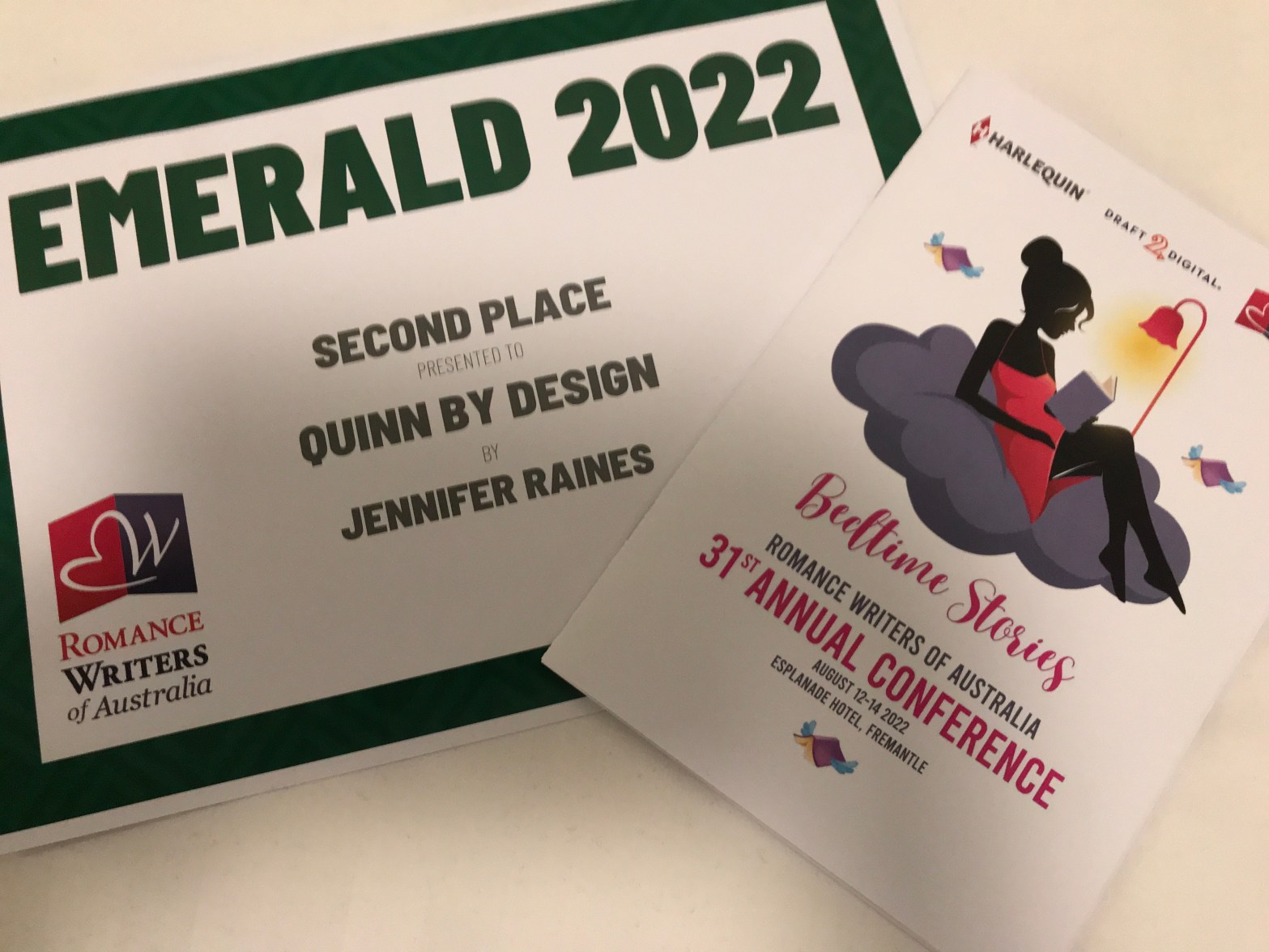
So what did I learn at Bedtime Stories, the 2022 Romance Writers of Australia conference?
Multi-published USA Today bestselling author of contemporary romance Zoe York’s keynote reminded us that you gain one reader at a time; the author journey is a marathon not a sprint, and that each new reader can be introduced to your backlist. That’s if you have a backlist—I’m working on creating one!
Pamela Cook—Climb Inside Your Character’s Skin—challenged us to watch two skiing videos—one backed by mood music, the other containing the raw sounds the downhill skier could hear—to get inside the head of the character and see, hear, feel, think and experience the world as they were. The takeaways were as different as the conference participants—for me video 1 was mellow, relaxed, almost playful whereas video 2 was gritty, adrenalin-charged with high stakes.
Kristine Charles delivered a fabulous session—Let’s Talk about Sex, which was entertaining, informative and challenging, reminding us that sex needs to be both safe and consensual in modern romance. How does intimacy prompt the protagonists to make new and different choices? Readers don’t want the IKEA conundrum—insert Part A into Slot B; instead they want to be in “the emotional gooey centre”.
Dr Jodi McAlister’s laugh-aloud session was about The Perfect Date, inviting us to define a date and dating, then pushing us to think about the goal of a first date, a second date, a failed date and our reaction to these. Are we reacting with our hearts, our heads or our bodies? Or is tonight the night to Netflix and chill—aka—watch Netflix with a romantic prospect, with the eventual expectation of sexual activity.
I know I attended an excellent session with Amanda Kendle—Polishing and Strategising your Online Presence, and I know many in that audience were light years ahead of me in understanding and using the various platforms available to writers. All I can do at this stage is promise to think about it all and get back to you.
Maisey Yates, New York Times bestselling author of more than 150 Mills and Boon novels, gave an inspirational closing keynote. It’s impossible to do justice to it in a few words, but she finished by providing 13 lessons she’s learned in her thirteen years as a published author. Key takeaways for me were—ideas are cheap; execution is what counts—only writing teaches you how to write—you can fix crap; you can’t fix a blank page—staying published is harder than being published—failure is to be expected.
So, it was the right decision to hop a plane and travel to Fremantle. An in-person conference introduces you to like-minded people, to opportunities to learn and grow, and reminds you of the dedication and generosity of fellow romance writers—in this case the passionate volunteers with RWAustralia who organised this conference. Thank you RWA.