Weeding and editing can be creative

Recently, I’ve been helping to clean a house that provided a home for an older single man for fifteen years. He was an active and engaged resident, who carefully tended his home, loved his garden, and connected with his neighbours.

COVID-19 shook him, making him anxious about himself and others, so he hunkered down, and his mental and physical health declined over the long period of lockdowns and restrictions. He was adamant he didn’t want to go to a nursing home, but after a fall and becoming unsteady on his feet, that appeared to be his only option. Before arrangements could be made to transfer him to a nursing home, he died. Perhaps he decided  his time was up? His death was peaceful. The loss of dignity and individuality which too often follow admission to a nursing home would have distressed him enormously.

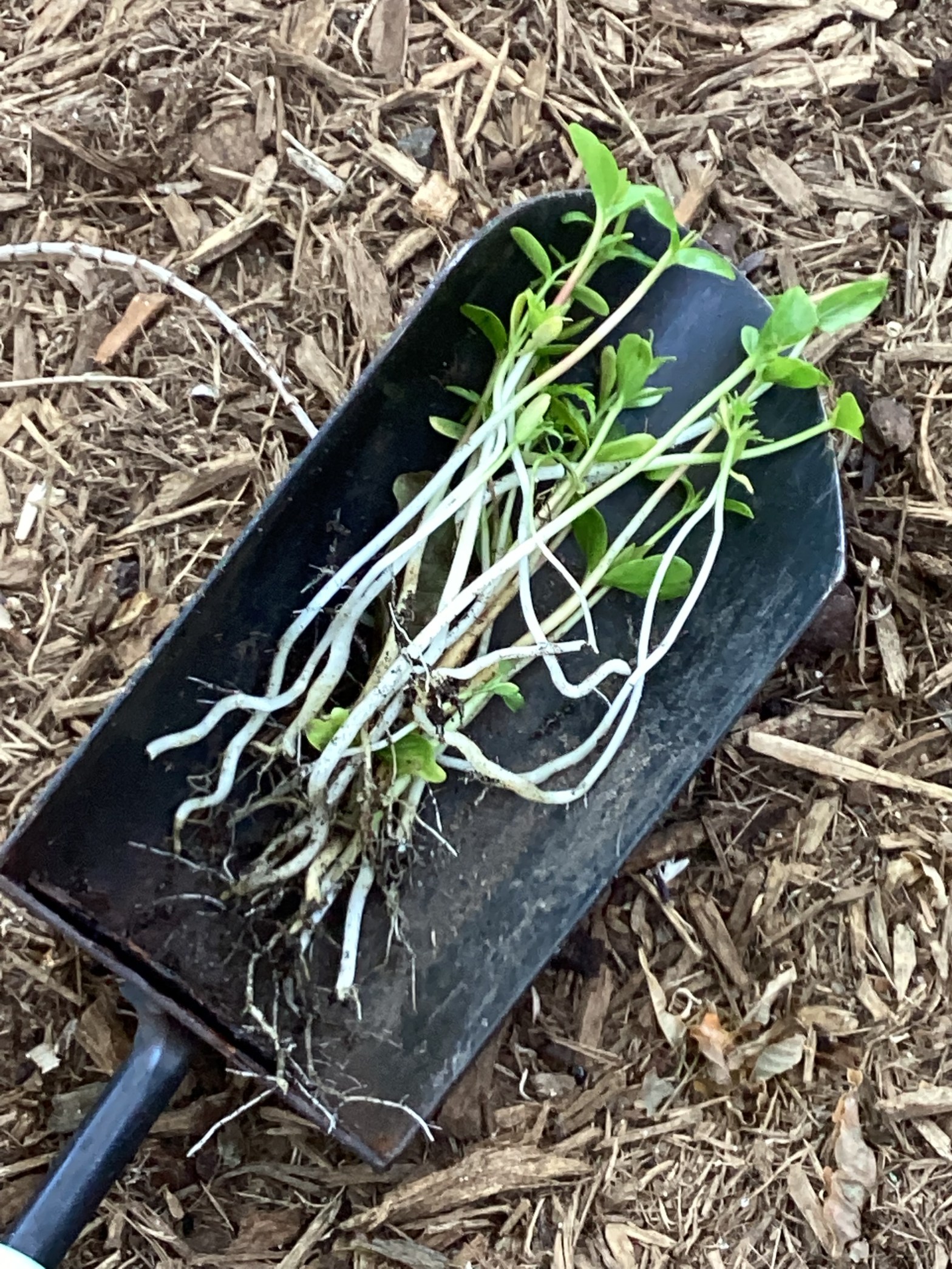
My cleaning chore was his garden. In the last few years he’d allowed it to become an impenetrable jungle. Birds, encouraged by the feeding trays he left out, had dropped seeds and there were dozens of small and medium sized trees in a tiny suburban yard. The owner brought in landscapers to clear fell and remove most of the unwanted growth. I arrived to five fully grown trees—a very old, cream frangipani, a large spreading camellia, a Silver Sheen pittosporum with its trunk black and thick, an arrow like pine and something which I can’t identify, but which the local possums love—and bare dirt between them.

The dirt is alive.

Each day another green shoot springs up, valiant and determined and unaware it’s not wanted. I’ve crawled across every square inch of space to individually excavate those green shoots—some of which could become huge trees—and untangle the root mat criss-crossing the yard just below the surface.

I’ve planted some hardy flowering plants, some sturdy ground creepers and mulched and watered to create a welcoming, but not overwhelming, green space. I’ve worked through dappled sun, high winds, spitting rain and body-drenching humidity, and I’m proud of what I’ve achieved.

It’s not dissimilar to writing and editing. Painstaking, cross-checking details, returning multiple times to weed out unnecessary words and elements that distract from the story you want to tell.

The house is ready to welcome new residents. It won’t be a home again until the rooms ring with conversation, tears and laughter, until there’s movement through spaces, jostling to be first in the shower, food prepared and shared, and hugs exchanged.

I hope Grace Under Fire (due March 2023) when I finish weeding—or rather editing—offers the same welcome and respite from the uncertainty of the outside world. Reading a good book can be like coming home.

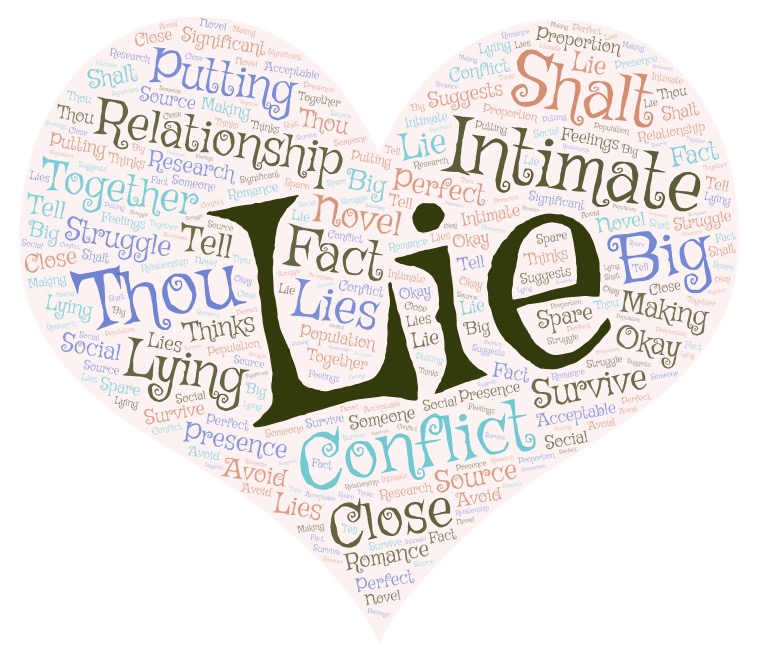
Are there any good lies?

For some reason—possibly I didn’t pay attention at the right time and in the right place, or perhaps I heard only a paraphrase of the original, or had a teacher who went straight to the punchline—but I remember the phrase “thou shalt not lie”. The Old Testament says “thou shalt not bear false witness against thy neighbour”. Broadly speaking don’t speak falsely in any matter, lie, equivocate or in any way devise or design to deceive your neighbour. 

To equivocate—say that a few times and see how it rolls off the tongue. Apart from the feel of the word in your mouth, its meaning packs a punch—”to use ambiguous language to conceal the truth or avoid committing oneself”. I can already picture the complications if one of my characters equivocates at a critical moment.

Telling the truth is a value shared across countries and cultures. So, in a phrase used by politicians, preachers, poets and researchers—there are more things that unite than divide us as people on this planet.

Research also suggests a significant proportion of the population thinks it’s okay to tell a lie to avoid social conflict; that it’s acceptable to lie to spare someone’s feelings. In this scenario the most common lies include:

  • I’m fine, nothing’s wrong
  • I didn’t get the message
  • I’ll call you right back
  • Thanks, it’s just what I always wanted
  • I have no idea where it is.

That’s not the kind of lying which hits with the force of an out-of-control dump truck and leaves you battered and sobbing with quiet desperation under the doona.

“Thou shalt not lie” has stuck to me from my misspent youth. I didn’t really have a misspent youth. I was confused, anxious and often living in my own head. But I was absolutely certain “lying is a sin”. I’d discover a deception, and in my head the words would form—“THAT’S A SIN”—always in neon-flashing capitals. 

A sin? Whoa—that’s super heavy stuff I absorbed as a child. Calling a lie a sin makes it “an immoral act considered to be a transgression against divine law”. Milder definitions talk about a crime, a misdeed or wickedness. Confession time—I think wickedness is a delicious word. See how easy it is to take me down a vocabulary rabbit hole.

But putting it all together, lying—not the “you look good in that outfit” variety—is a big no-no for me in a close or intimate relationship. In fact, intimate relationships struggle to survive in the presence of lies, making it the perfect source of conflict in a romance novel. You forgot to mention you:

  • had an affair with his brother
  • deliberately broke a promise to your ex-lover
  • have a child from a previous relationship
  • didn’t win the lottery, instead you stole your best friend’s identity
  • are bi-sexual.

Then again—some people have secrets. And I think I should stop here and return to my current manuscript …

Send me a message with your example of a good lie.

A hopeful spring

September 1 marks the beginning of spring in Australia.

It was the best of times, it was the worst of times, it was the age of wisdom, it was the age of foolishness, it was the epoch of belief, it was the epoch of incredulity, it was the season of Light, it was the season of Darkness, it was the spring of hope, it was the winter of despair, we had everything before us, we had nothing before us, we were all going direct to Heaven, we were all going direct the other way.

(Charles Dickens, A Tale of Two Cities, 1859, bk.1, ch.1)

When I look at the world at the moment, everything Dickens said makes sense.

Except everything is different because we are all ourselves, and we experience each moment based on our physical, mental and emotional well-being at that precise second.

Can I put food on the table? Am I healthy? Do I have secure housing? Am I financially stable? Am I safe? Are my loved ones safe? Am I loved? Am I valued in my workplace, among my peers and in my home? Do I have something to look forward to? This loosely translates to Maslow’s hierarchy of needs where survival is the most basic need and being able to achieve your full potential is at the highest level. And in today’s world a lot of people are struggling to meet the needs that matter most to them.

But I digress.

I started this blog because it’s spring, because the quality of the light has changed, the length of days has changed, and the sounds I’m hearing have changed. There’s more colour and variety in the garden, the native bees have come out to play, and the noisy miners are dive-bombing the cats, who roar in protest and the dance starts over.

More people are on the streets. They seem to be smiling more and their smiles are wider, toothier. They’re shucking jackets and scarves with breezy abandon and revealing tantalising stretches of skin that have been buried beneath layers of cloth for months. They’re lolling about on blankets in parks, pretending to read a book while dozing in the sun. Children are running for the sheer fun of wind through their hair. Lovers are holding hands, exchanging secret glances or starting to weave dreams.

All the delicious elements that make spring add up to a sense of joy and possibilities. I’m hugging the sense of possibilities close and starting a new story.

In last month’s blog I reflected on Pamela Cook’s session at the #rwaus2022—Climb Inside Your Character’s Skin. That’s how I’m spending my thinking time at the moment—trying to get inside the head of my new characters and see, hear, feel, think and experience the world as they do. What are their challenges? Do they have regrets? What are their dreams?

Dylan Thomas set the scene for Under Milkwood (1954) with his opening words: To begin at the beginning. It is spring, moonless night in the small town, starless and bible-black.

P.S – my dendrobium orchid is almost white this year when it’s usually a pale buttery yellow.

Finding your tribe

It’s an expression you’ll hear at romance writers’ conferences. You sigh with relief knowing everyone in the room is on a similar wavelength. You can talk freely. And if you ask what a “danger bang” is, someone will give you a straight answer—sex when the situation is perilous. Pick your own peril.

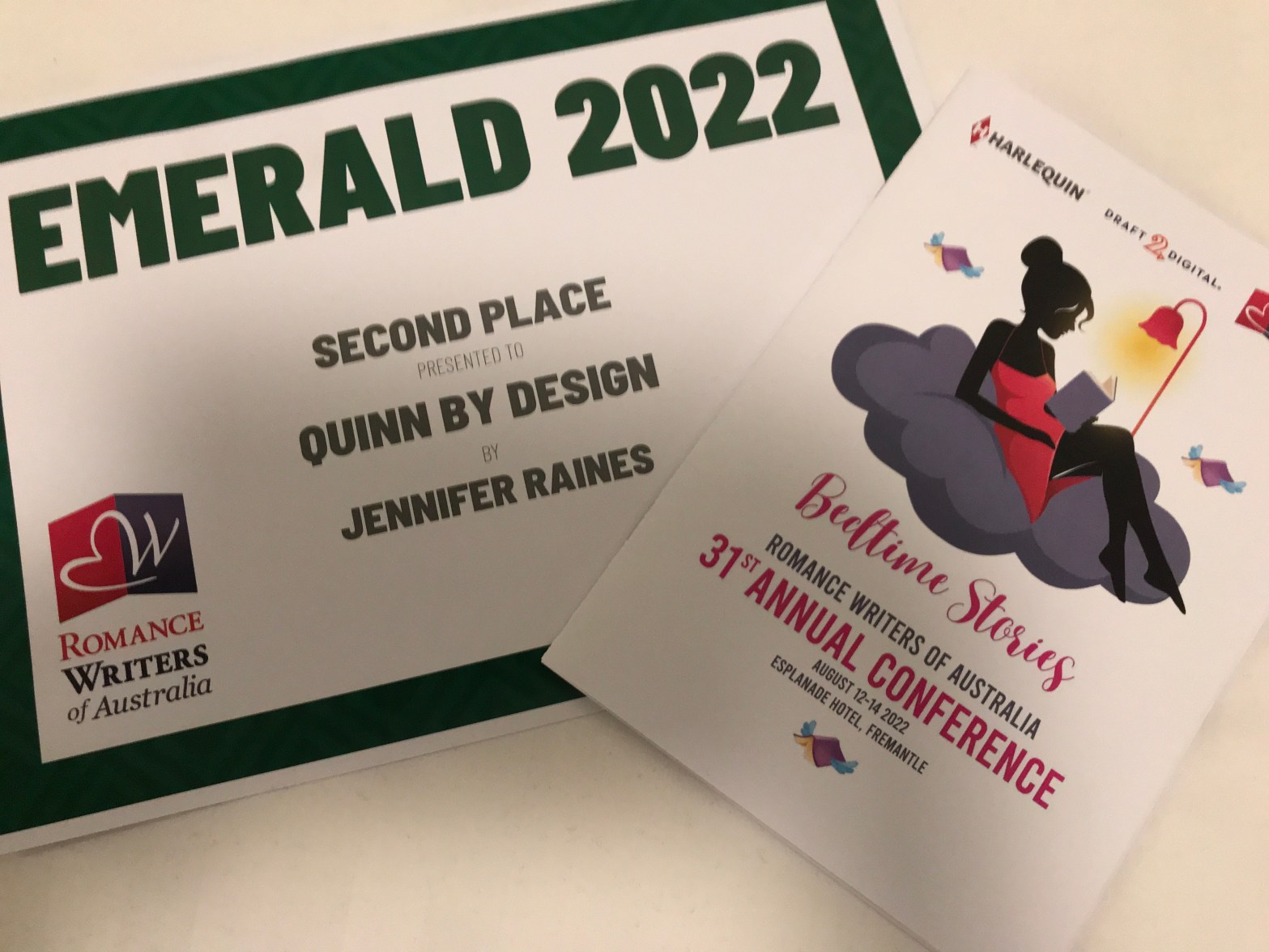
So what did I learn at Bedtime Stories, the 2022 Romance Writers of Australia conference?

Multi-published USA Today bestselling author of contemporary romance Zoe York’s keynote reminded us that you gain one reader at a time; the author journey is a marathon not a sprint, and that each new reader can be introduced to your backlist. That’s if you have a backlist—I’m working on creating one!

Pamela Cook—Climb Inside Your Character’s Skin—challenged us to watch two skiing videos—one backed by mood music, the other containing the raw sounds the downhill skier could hear—to get inside the head of the character and see, hear, feel, think and experience the world as they were. The takeaways were as different as the conference participants—for me video 1 was mellow, relaxed, almost playful whereas video 2 was gritty, adrenalin-charged with high stakes.

Kristine Charles delivered a fabulous session—Let’s Talk about Sex, which was entertaining, informative and challenging, reminding us that sex needs to be both safe and consensual in modern romance. How does intimacy prompt the protagonists to make new and different choices? Readers don’t want the IKEA conundrum—insert Part A into Slot B; instead they want to be in “the emotional gooey centre”.

Dr Jodi McAlister’s laugh-aloud session was about The Perfect Date, inviting us to define a date and dating, then pushing us to think about the goal of a first date, a second date, a failed date and our reaction to these. Are we reacting with our hearts, our heads or our bodies? Or is tonight the night to Netflix and chill—aka—watch Netflix with a romantic prospect, with the eventual expectation of sexual activity.

I know I attended an excellent session with Amanda Kendle—Polishing and Strategising your Online Presence, and I know many in that audience were light years ahead of me in understanding and using the various platforms available to writers. All I can do at this stage is promise to think about it all and get back to you.

Maisey Yates, New York Times bestselling author of more than 150 Mills and Boon novels, gave an inspirational closing keynote. It’s impossible to do justice to it in a few words, but she finished by providing 13 lessons she’s learned in her thirteen years as a published author. Key takeaways for me were—ideas are cheap; execution is what counts—only writing teaches you how to write—you can fix crap; you can’t fix a blank page—staying published is harder than being published—failure is to be expected.

So, it was the right decision to hop a plane and travel to Fremantle. An in-person conference introduces you to like-minded people, to opportunities to learn and grow, and reminds you of the dedication and generosity of fellow romance writers—in this case the passionate volunteers with RWAustralia who organised this conference. Thank you RWA.

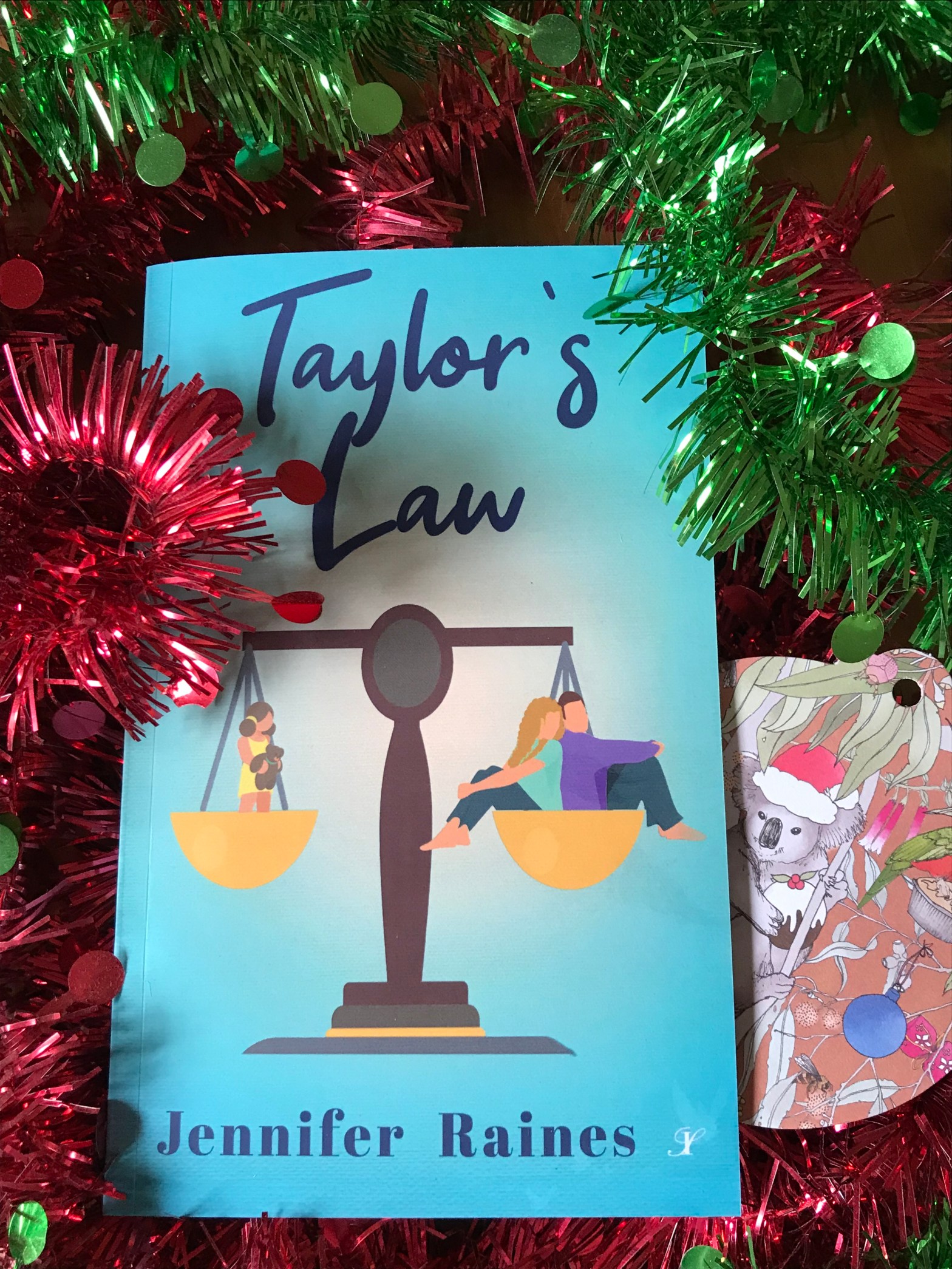
Writing Taylor’s Law

A farmer’s daughter, with no passion to work the farm

A swindle igniting a passion for justice

A toddler—mother dead, father unknown

An Australian Broadcasting Corporation (ABC) news team—reporter, pilot and cameraman—killed in a fatal helicopter crash in Lake Eyre during a routine assignment

A man whose private homage to his father includes sporting a ponytail and an earring

Some fact, some fiction. Add wealth, power, greed, envy balanced by compassion, loyalty and love and ignite with passion and imagination.

What’s the starting point of a book?

For me, the initial trigger may be a single incident, like the helicopter crash. It appears in a scrolling news ticker on your screen—appearing—disappearing, yet so many lives are impacted by this event in small and monumental ways.

Who takes responsibility for the child or children left behind when a single parent dies? Who wins if there are credible conflicting claims?

Stories are born of other stories, the layers built slowly and carefully so the initial inspiration is woven invisibly into the fabric of the new tale. Stories take time, research, planning and endless revision—at least for me.

You give your new tale to trusted readers, who point out the implausibility of an action, the inconsistency of another, an annoying characteristic you’ve assigned a major player, tell you that you’ve been too abrupt in a change of scene or left hanging an unanswered question.Perhaps, if you knew at the beginning how many hours of work were required to unearth that little tale you might have left it buried in the jumble of your imagination. Sometimes the challenges make me more determined to tell the story well, to convince the reader my idea has merit. I can’t let it go. Sometimes I set it aside for months or years—I haven’t yet succumbed to the notion of forever. Sometimes, my days are pure joy.

You’ll have to wait until March 2023 for Ella’s sister’s story—Grace under Fire, but you’ll find an excerpt at the back of Taylor’s Law.