
Spice and all things nice …

Romance Writers of America provides a simple definition of a romance. Two basic elements comprise every romance novel: a central love story and an emotionally satisfying and optimistic ending. Okay, I’ve got that clear. I write romance.

Another critical element of a romance is its heat level.

I was listening to a romance writers’ panel recently and a question was asked about the level of spice in a book. There was a bit of chit chat, but what struck me was that some people have a desire for high levels of spice/steam/explicit sex in romance novels, without any reference to the specific characters in that book and where he/she/they might be on their journey towards sharing their body with someone else, not to mention the author’s comfort with sharing explicit descriptions of sexual and sensual acts.

Social media, especially TikTok is changing the heat level readers expect, or are looking for in romances, and in fact some new readers are equating romance with sex, often lots of explicit sex. In fact, sex = romance. That’s a pity because romance is so much more.

But it reinforces the view that clearer guidance to readers on what sort of romance they’re picking up is needed.

In thinking about this topic, I came across a few things. Lists, for a start. Way back in the mists of time—that would be 2022, Reedsy released a list of 12 romance subgenres.

  1. Contemporary romance
  2. Romantasy
  3. Young adult romance
  4. Erotic romance
  5. Historical romance
  6. Regency romance
  7. LGBTI+romance
  8. Romantic comedy (romcom)
  9. Religious romance
  10. Paranormal romance
  11. Gothic romance
  12.  Romantic suspense

I can already think of three subgenres missing from this list: sweet, medical or now STEM romance (think Ali Hazelwood) and dark romance, which was described on a Q & A thread I was reading as “a specific genre, where the subject is typically very heavy, and dark romance can include mafiosos and assassins, and deal with other issues such as stalking, murder, Stockholm syndrome, etc, and is typically not recommended for ages 18 and under.” Trigger warnings are encouraged.

But lists don’t give you the heat level, and making your own decision via a hashtag or with a misplaced adjective can be a disaster.

I found a more thoughtful discussion in Emily Keyes 2024 blog Sweet, Steamy, Spicy: A Guide to Romance Novel Heat Levels She suggests covers no longer indicate heat levels, and readers want to know before they start to read a book.

This is true from my experience. In my current series Choosing Family (Books 1-4), I have had a reviewer decline to comment on Masquerade #1 on the basis that it was too spicy for them, and other reviewers say A Just Man #4 could have done with a bit more spice. I have open door sex in my books between consenting adults, who’ve established, at a minimum, trust and affection. I often use the term heat with heart, but I’m beginning to wonder whether that accurately describes my writing.

In a variety of contexts, authors are asked to rate the spice level in their books. Hard to do when expectations are constantly changing.

At one time, I might have rated my books at a 3.5 level on the 🌶️ scale. For some reason, I think the 🔥 scale is hotter, but really chillies and bush fires can’t be compared. They’re not even measured on the same scale. Bushfires can be over 1,000 degrees celcius, whereas chillies are scored using the Scoville Heat Units (SHO) which is a measure of heat or spiciness based on the concentration of capsaicinoids, among which capsaicin is the predominant component. But, that’s a digression …

Keyes concludes that the solution for now, is to make the heat level explicit in the blurb or extra descriptive lines available on book sites. Keyes includes smut/smutty romance novels, erotic romance novels and romantic erotica novels in her definitions. On occasion, I’ve used spicy or steamy to refer to my romance, but based on her November 2024 definition that might be a mistake …

“Both (spicy or steamy) of these describe romances where sex features heavily—we’re not talking just one or two sex scenes, but a sustained sexual connection that the main characters repeatedly explore throughout the story. This connection still won’t overshadow the romance, but it’s prevalent enough that if you took out the sex scenes, the book would be shorter and you wouldn’t have to worry about forgetting to pause the audiobook of it before taking your headphones out, thereby exposing your colleagues to your elevated literary tastes.”

None of these definitions cover the heat level in books based on “dirty talk” where the level of chitchat between the protagonists is arousing and implies sex is a micro-step away, then for plot reasons, they desist or sex is ultimately not on the page.

Readers want what readers want, but from this short excursion into definitions of heat, I’m probably best to stick with open door as a descriptor, and maybe keep testing if readers interpret heat with heart as meaning sex in my books is between consenting adults who are already emotionally engaged. The consoling thing is that there are readers for every style of romance. We just have to reach our tribe.

You can find me and my books here: website FaceBook Instagram

Find me on

You can also contact me directly via the contact page on my website if you have any other questions.

Fraction too much Friction

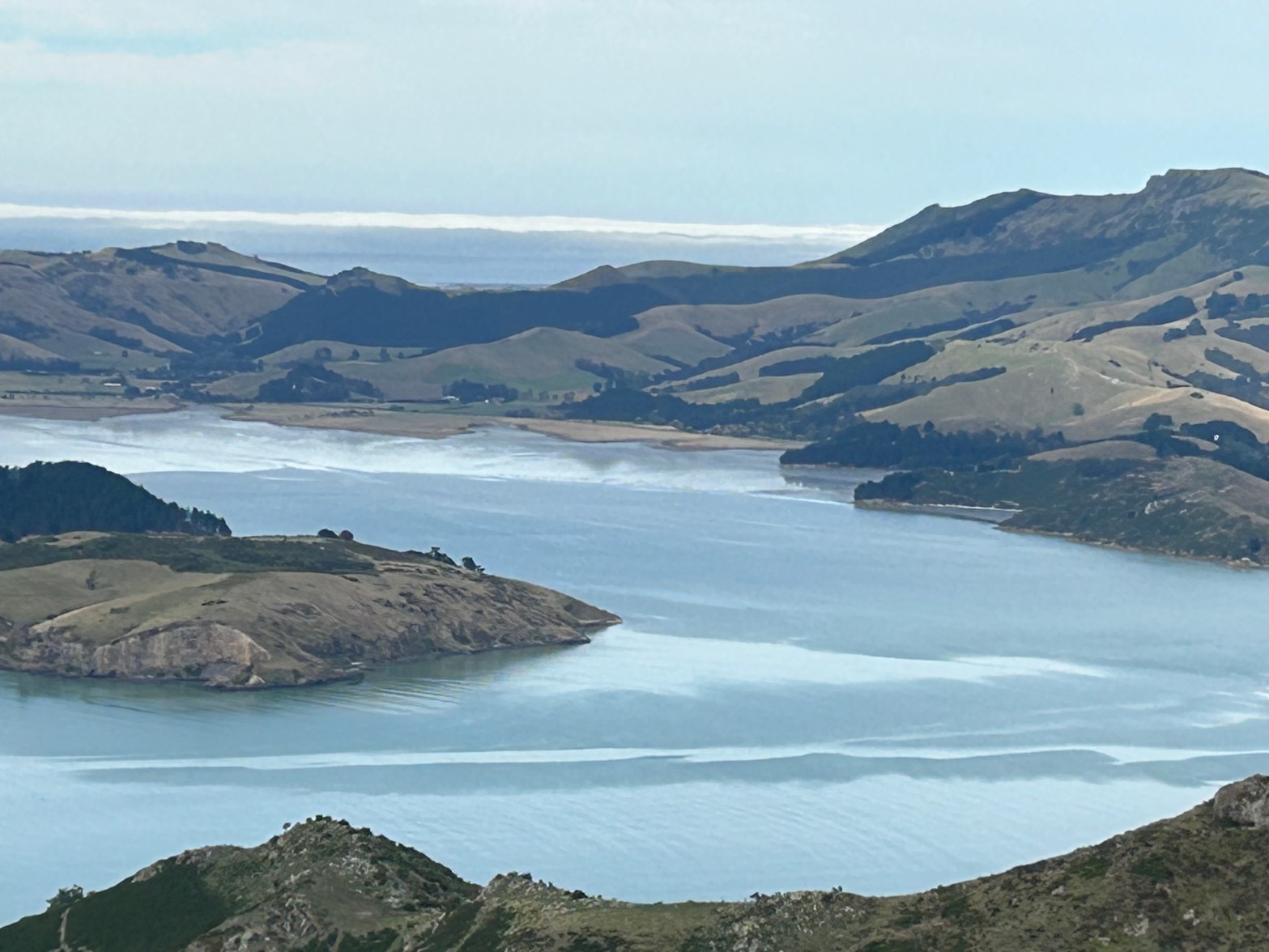
Website photo: from Gondola lookout Christchurch NZ

The title of the old Tim Finn song has been on repeat in my head lately. Hard to realise it was released in 1983—that’s more than 40 years ago. I was a babe in arms, and my mother sang it as a lullaby. Not really, but … the line popped into my head because of the way the world is currently. We don’t have a fraction too much friction—we have a tsunami of friction. Creating constant disagreement and alarm is a weapon used to make us feel helpless. I, for one, sometimes feel overwhelmed.

I wish for a simpler world. Then wonder if there’s ever been a simpler world?

I’ve come to the conclusion that what I’m desperately missing is a world where fact and fiction are two different things. At its heart, fiction is non-fact. See, simple.

Except it’s more complicated than that, and in this busy world people seem to want simple solutions.

Some things are fiction until they become fact. Take space travel.

History is another tricky area, not because we don’t know certain dates and facts, but because the person telling the story has a particular perspective. This doesn’t make it wrong, it just means parts of the story are untold. For example, for a long time Australian history was told from the perspective of white settlers. I reckon any Indigenous person would have a different perspective. Women’s voices have often been missing in histories, as have those of people without power. That’s why a lot of historians now believe history is a dialogue, rather than a set of uncontested facts. We’re continuing the conversation as we collect new information. That doesn’t minimise the importance of history in helping us understand how to avoid repeating mistakes of the past. It makes the argument for the importance of history stronger.

Popular culture is also interested in history, but sometimes has to dress it up because hey—we’re talking entertainment here. There are numerous examples, but in the vanguard was the 2016 movie,  Hidden Figures. It was loosely based on a non-fiction book of the same name by Margot Lee Shetterly, telling the story of three female African-American mathematicians who worked at NASA during the Space Race. It enjoyed commercial acclaim despite questions being asked about its historical and cultural accuracy. It’s described as a drama/history. Fact and fiction intertwined for entertainment—faction.

Fact, fiction, faction.

Lochlan Morrissey argued in The Conversation, October 5, 2017 that the use of facts in politics has always been contestable.

“Political propositions”, which are directly relevant to the governance of people, are designed to appeal to emotions and beliefs, and so cannot be held to the same scrutiny as scientific propositions.

Essentially the argument is that feelings and intuition count as evidence for beliefs, and a belief can override all other evidence, including rational or scientific evidence. In fact, reason may be irrelevant to changing a belief because emotion plays a huge part.

Kellyanne Conway used the phrase “alternative facts” in January 2017 to explain why Sean Spicer told a national and international audience Trump’s was the largest presidential inauguration in history. All rational, scientific evidence said this was not true. So, essentially Kellyanne was offering a political proposition, not a fact, consistent with Steve Bannon’s belief that “flooding the zone with s***” is good political strategy as is saying something is true until people ultimately start questioning themselves.

I’m hankering for a world where facts are acknowledged and respected. And one of the few fields where that’s possible is science, where evidence—meticulously collected, checked, peer-reviewed, replicated and tested—is recognised as fact and not dismissed as opinion or belief. Take climate science, which some commentators are trying to tell me is a cult or a religion, whereas science collected over decades proves it’s real.

It’s not only real, it’s impacting our lives and we’re paying for the destruction while fossil fuel companies bank the profits. People are fleeing in terror from fires, floods and other extreme weather events. We’re paying for the damage to our homes and livelihoods through increased insurance costs and taxes to restore public infrastructure. Believing it isn’t happening is endangering the lives of our children and grandchildren.

Time to take a breath here.

I write romance, but I can’t separate who I am from the world I live in. So, I write about people who find trust, passion, loyalty and respect with their partners. I can’t think of a better recipe for a happily-ever-after.

I’ll have copies of my latest release A Just Man—Choosing Family Book 4 (released 18 March) with me at A Romantic Rendezvous in Sydney—23 March 2025. Follow on FaceBook

You can find me and my books here: website FaceBook Instagram

Find me on

You can also contact me directly via the contact page on my website if you have any other questions.
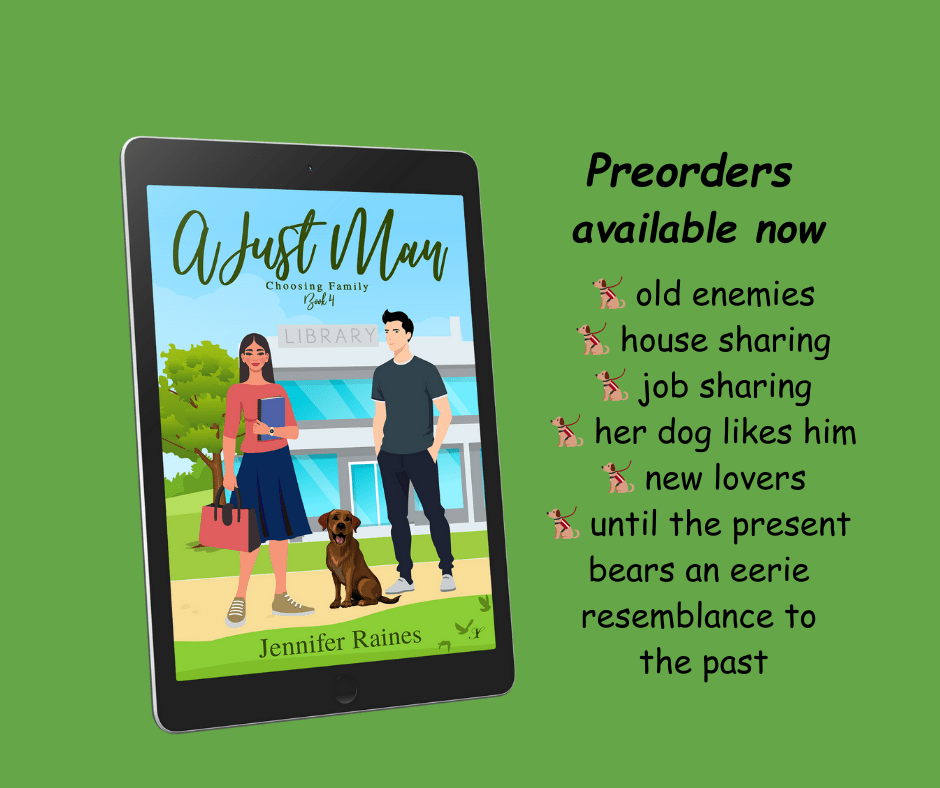
A Just Man—Choosing Family Book 4

Sometimes I feel like a bower bird. So many bright shiny things to collect, store, study, then turn into a book. And it can take years for all of the pieces to fall into place. A Just Man fits that category.

The initial inspiration for this book was my rage at the increase in the number of strip searches by cops involving underage girls (10-17 years), especially illegal strip searches.

In 2019, a sixteen year old girl was strip searched at a music festival. The Australian Broadcasting Commission (ABC) showed the then NSW Police Minister saying he “would want” officers to strip-search his children, after new data revealed 122 underage girls had been subjected to the practice since 2016. I was shouting at the screen. Especially given that the Law Enforcement and Conduct Commission had already heard that some officers didn’t know their obligation in relation to minors, and in the case of the 16-year-old, there was no justification for initiating the search. Ultimately, the police officer involved said it was “probably unlawful”.

So, let’s consider the facts: Under New South Wales legislation, police are only allowed to conduct field strip-searches where the urgency of the situation requires it. Where the person being searched is a minor, police are required to arrange to have a parent, guardian or support person present unless it’s necessary for the safety of the person or to prevent evidence being destroyed.

Sadly the situation of strip searching children continues. An editorial in the Sydney Morning Herald in October 2023 talked about strip searching of minors being “a travesty of law and order”.

In March 2024, a report released by the Redfern Legal Centre noted that 1546 children (aged 10-17 years) have been strip searched by NSW Police within a seven year period from June 2016 to July 2023. Some key findings within the report are: 

  • the youngest child subjected to a strip search by NSW Police was a 10-year-old in 2017. 
  • over half of these searches occurred within police stations, (824 cases), while the remaining 46.71% (722 cases) occurred in public. 
  • First Nations children made up almost 45 per cent of children strip searched despite being only 6.2 per cent of the population aged 10-17 in NSW.  
  • the most recent statistics for the 2022/23 financial year show an increase of over 50% in strip searches of girls. 

So, I had the rage, which gave me a possible theme. But remember, I’m writing romance here, so it’s what comes after the rage that’s important. Centuries ago I read a romantic suspense novel by Paula Gosling. The leads were a cop and a university lecturer who’d first met years earlier when he was a young cop called to a university protest, and she was on the picket line. Their second meet up involves a murder. So, at least one other author had matched a cop and an arrestee.

I decided it was plausible for my rookie cop, Mick, and my teenage victim, Kelly, to meet again. My initial meeting was edgier than Gosling’s novel and a miscarriage of justice. How do Mick and Kelly move past that? How has that experience shaped the people they are now?

The title is a bit of a giveaway—remember, we’re talking romance here. A Just Man. “Just” is an adjective that carries so much weight. It means fair, open-minded, principled, ethical and trustworthy and a whole lot of yummy things I look for in my characters. But good intentions aren’t enough.

If you want to know how Kelly and Mick meet again and how they resolve their past, check out A Just Man—Choosing Family Book 4 releasing on 18 March 2025, pre-orders available now.

I’ll have copies with me at A Romantic Rendezvous in Sydney—23 March 2025. The day includes author panels, lunch hosted by some of your favourite authors, then an afternoon of book signing. Tickets still available: bit.ly/arr2025tix  Follow on FaceBook

A Just Man—Choosing Family Book 4

No matter where you run, the past will find you

Kelly needs to enhance her resume. Why else would she accept a placement in Tullamore facing her phobia about country towns? Years ago, a rookie cop humiliated her during an illegal strip search. Problem is, that former cop is now the deputy principal of her new high school and her boss. Sharing a house, a commute, and now an investigation to unravel a series of disasters that look like sabotage, Kelly takes the previously unthinkable step from enemies to allies to lovers.

Taking a job as deputy principal to uncover suspected corruption at the school, Mick plans to use the appointment as a stepping stone to principal of his own school. Then Kelly, his biggest mistake in his short time on the force, walks through his door. Given the chance to make amends brings peace for both, until Kelly is caught in the crosshairs of his investigation. Protecting her is his only goal.

You can find me and my books here: website FaceBook Instagram

Find me on

You can also contact me directly via the contact page on my website if you have any other questions.

Reflections at the start of 2025

The start of a new calendar year almost forces you to reflect on where you are and where you’re going as an author. Why am I still doing this?

Basically because a voice inside my head says write.

I’ve heard lots of presenters at conferences and in articles say—“Write what your heart tells you to write. Write what you want to read, and you’ll find an audience.”

I write about the kinds of characters who interest me, characters with personality traits I admire, people I’d like to have a chat with, then have wild monkey sex with.

However, long before I was published, an editor for a major publishing company told me, “It doesn’t matter how well you write. If your book isn’t the book we want at that moment, then we won’t touch it. We might pick up that same manuscript sometime in the future without you changing a word.”

I think a lot about the publisher’s “moment”. Has my story just missed the moment? Has the character type I have the hots for gone off the boil for the wider reading public?

I also think about the phrase “how well you write”? Some people write elegant, grammatically correct, lyrical prose, but their stories fail to captivate. Some writers have magical stories in their heads, but their prose is faulty. The second problem is far easier to fix than the first, and to be honest, I think a lot of readers don’t care about the prose if the story is compelling.

I’ve written a few books now. Not having the skills or resources for indie publishing, I queried some major publishing companies with manuscripts that had won or been finalists in competitions. The rejections were encouraging, often lengthy and involved real conversations. Then I got picked up by Inkspell Publishing, a small independent US publisher, from a competition. Having support makes a difference.

Next step—finding your audience—and in today’s remarkably interconnected world, it’s complicated. It’s hard to find numbers for how many new books Amazon publishes or uploads or distributes each day, but a figure that pops up in searches is 4,300. That’s a lot of competition for your book on any given day, unless you have some other claim to fame, a bottomless marketing budget, endless time, and influential friends—hey, I know Meaghan Markle. Well, not personallyTaylor Swift—she loved my book. I’m sure I saw her reading a book that looked exactly like mine.

Stop writing! whispers a voice in my ear. You should be marketing! Which brings us to social media and the constantly changing algorithms that highlight extremes rather than messages of hope and love, loyalty, enduring passion and happily-ever-afters. You can spend lifetimes navigating your way through this maze and never go viral. That’s before AI gobbles up and regurgitates your book under someone else’s name or a scam creams off any royalties.

And given that I’m baring my soul here: it’s incredibly difficult to cut in on established relationships between much-loved authors and their readers. There are only so many hours in a stressful day. Why wouldn’t you choose someone you’re familiar with, who you know will hit all the right spots for you, instead of taking a risk on a new to you author whose name you’re seeing for the first time? This is especially true if you’re offered a discount, or a chance to review a freebie. If you love an author, and you’re offered their next book or someone unknown, of course you’ll read your fav’s next book.

Would I like to see my name flown across Sydney on a banner, or written in the sky to float and fracture into single letters across suburbs, so people whisper my name in hushed tones—have you read Jennifer Raines’s latest contemporary romance? Of course, I would. But doubt is a constant companion. Am I a fraud? Is this a vanity project?

Out of the blue, I received a sms from someone I know, but rarely see. She’d read Betrayal—Choosing Family Book 3: she said

Out of order, but really enjoyed it. You are very good.

It only takes one voice, one person, and your day changes. Encouraging reviews and reader support are what keep me and other writers going. Oh! And that voice inside my head that says write, write, write.

As an author, my offer to you is hunks with depth, women who care, and heat with heart.

My 8th book, A Just Man, and the fourth in my Choosing Family series will be published on 18 March 2025, just in time for A Romantic Rendezvous in Sydney—23 March 2025. Tickets still available: bit.ly/arr2025tix  Follow on FaceBook

I’d love it if you dropped by to say hello and tell me what you like to read.

A Just Man—Choosing Family Book 4

No matter where you run, the past will find you

Kelly needs to enhance her resume. Why else would she accept a placement in Tullamore facing her phobia about country towns? Years ago, a rookie cop humiliated her during an illegal strip search. Problem is, that former cop is now the deputy principal of her new high school and her boss. Sharing a house, a commute, and now an investigation to unravel a series of disasters that look like sabotage, Kelly takes the previously unthinkable step from enemies to allies to lovers.

Taking a job as deputy principal to uncover suspected corruption at the school, Mick plans to use the appointment as a stepping stone to principal of his own school. Then Kelly, his biggest mistake in his short time on the force, walks through his door. Given the chance to make amends brings peace for both, until Kelly is caught in the crosshairs of his investigation. Protecting her is his only goal.

Find me on

You can also contact me directly via the contact page on my website if you have any other questions.

Trigger warnings and stuff I don’t want to read in a romance

Authors, academics and almost anyone who puts pen to paper have been thinking about trigger warnings for a while now. University courses carry trigger warnings. Television, streaming services, movies and books carry trigger warnings. I recently entered a writing competition and was asked to list trigger warnings.

People see trigger warnings as important content warnings to assist readers to choose or reject your novel based on topics they do or don’t want to read about, in particular, because a topic or experience might trigger traumatic memories.

Opinions are divided on whether or not they’re helpful.

In December 2022, The Conversation, published Proceed with caution: the trouble with trigger warnings, written by Jessica Gildersleeve, India Bryce and Kate Cantrell. They reviewed 20 peer-reviewed studies, published between 2010 and 2020. They found trigger warnings can be harmful to students, however their overall finding is that “when embedded as part of such a broader approach, trigger warnings can be a valuable tool for assisting with the management and reduction of trauma exposure.” The broader approach includes “a holistic, trauma-informed framework, across all disciplines, that promotes resilience and recovery through a skills-based approach to coping and capacity building”. So this is not a simple question, and there is no single or simple answer.

Trigger warnings in romance novels are also a hot topic.

Romance Rehab discussed trigger warnings and disclaimers in 2020, concluding that if a topic was included in a romance it should include a warning, for example: rape, domestic abuse, child abuse (all forms), self-harm, suicide, extreme drug abuse/overdose, animal abuse. The article added the no-brainer that “if the hero or heroine dies at the end of a book and there’s no HEA, I don’t need a disclaimer or trigger warning. I’ll need the author to reclassify the book because IT’S NOT A ROMANCE.”

Romances are by definition about emotions. Mine are about adults, with lived experiences, people we come to believe are real. As such, they have real experiences, so it’s impossible for them not to have experienced, viewed or heard about traumatic experiences. 

I don’t write on the page trauma, but I do refer to past incidents that have shaped my lead characters. I use those experiences to show why people might be hesitant to trust, or to open themselves up to further hurt. I look for hope and a happily-ever-after, so my writing goals are about healing and moving forward.

Recently, a few books have made me think about my personal triggers, although these are not necessarily books that trigger traumatic memories. They are books I don’t want to read, or don’t particularly enjoy, not because of the quality of the writing, but because I instantly reject characters exhibiting certain behaviours as romantic leads. These same characteristics and characters clearly resonate with other readers, who write glowing reviews. Have I said before that romance readers are a broad church? Well, they are.

So—stuff I don’t particularly want to read‑includes:

  1. Love triangles—walk away is my mantra. You either choose me or you don’t. I don’t care about the gender of the protagonist, but if one person is playing two people off each other it’s a turnoff for me. It’s a common trope in rom coms, and I’ve read some excellent examples, including by Australian authors. Scottish born author Mhairi McFarlane’s If I Never Met You has a twist where the female protagonist was dumped by her long-term partner. Devastated, she meets someone new, then her old partner decides he made a mistake and reappears. It’s a quirky take on the trope and almost won me over.
  2. Characters who will do anything for their love interest, including break the law, often violently—Nah! Vigilante justice has never worked for me, although it’s huge in popular culture. The entire notion that I, or my lover, can look at a situation and be the best combined cop, judge and jury is something I find increasingly insidious and disturbing. Having it peddled to me through romance freaks me out. I’m a bit of the view that a seriously bad boy will remain a bad boy, but hey, it’s not my role to diss with someone else’s fantasy.
  3. A lover who lies—this is my absolute biggie. Lying, especially when it’s critical to your lover’s sense of self is a turn off for me. Taking someone to bed with a big lie between you is not, to my mind, heroic.  Having said that, lots of great books play with secrets, lies and white lies, and I’ve used the seesaw of secrets and lies in some of my work. It’s a fine line.

Do you have strong views on trigger warnings or any tropes, themes or book characters that are always last on your to-be-read (TBR) list?

A Romantic Rendezvous—March 2025—Christmas giveaway

The Australian Romance Readers Association (ARRA) will again host A Romantic Rendezvous in Brisbane (22 March) Sydney (23 March) Melbourne (29 March) and Perth (30 March). Special guests will be Nalini Singh & Julie Ann Walker There will be panels, an author luncheon and a signing in each city. You can nominate the sessions you’d like to attend.

This Christmas, one lucky ARR2025 attendee will win a special treat—a $30 book voucher that they can spend at the signing.

To enter, readers need to take a selfie with one of their favourite books (ebooks count!) from one of the attending authors, then post it in the ARR2025 Attendees group (https://www.facebook.com/groups/arr2025attendees). Be sure to include the following in your post:

I’m looking forward to ARR2025 in <insert name of city> in March, and meeting <insert name of author/s>. Maybe I’ll see you there! #arr2025comp

(For an extra entry, tag a friend in the comments of your post.)

The winner will be drawn randomly on Christmas day from all entries.

Finally I’d like to wish everyone a happy and peaceful festive season with lots of good books to read. Links to mine are on the Books pages.

Find me on:

You can also meet me in Sydney – 23 March 2025 at A Romantic Rendezvous, contact me directly via the contact page on my website if you have any other questions.