
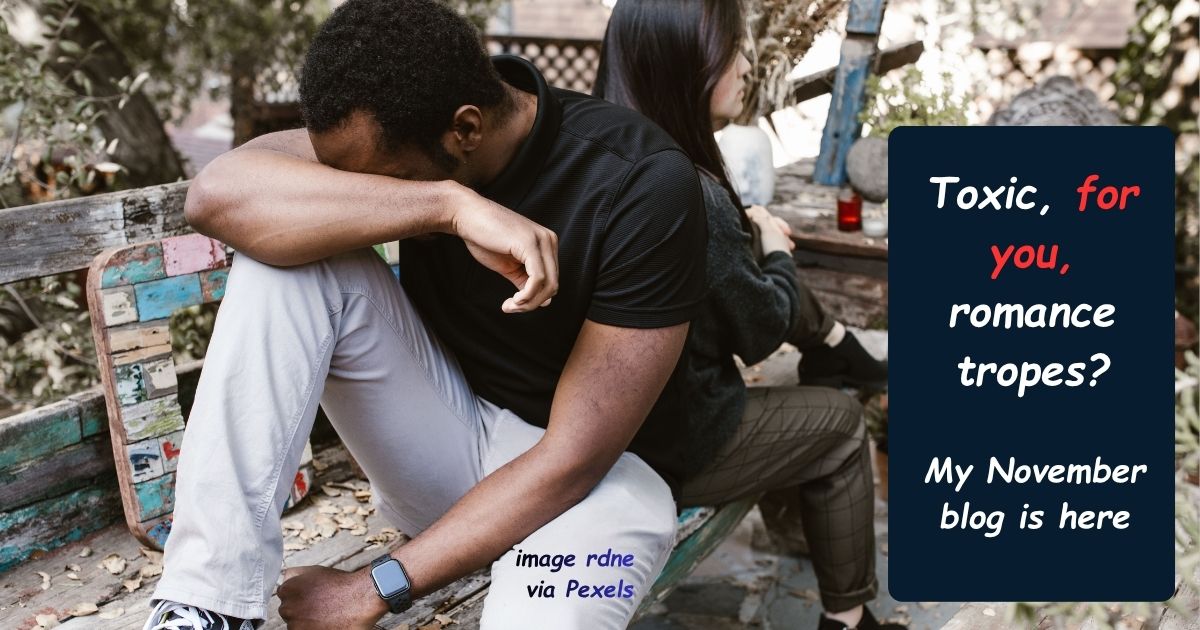
Recently I read an article by Zoe Williams (The Guardian 28 Sept 2026 ) entitled Gen Z has very strong opinions about age gap relationships—and it could be right.
To save you looking, Gen Z are those born between 1997-2012, that is between 13 and 29 today. The gist of the article is that once upon a time “older men and younger women were an unremarkable screen pairing”, but this has changed.
Williams’s raises the topic in the context of the new film adaptation of Jane Austen’s Sense and Sensibility, where the original text includes a 19 year age-gap relationship between Marianne and Col Brandon. The 1996 Australian release used actors aged 50 and 21, an actual age gap of 29 years. Williams’s argument is that while the new version used a smaller actual age range for the actors:
“The average gen Zer thinks an age gap of a single school year is a red flag of exploitation. So the film-makers got Herbert Nordrum, who is only 13 years older than Esmé Creed-Miles, but – per my point about school years – this is still way too many.”
“Often, when you watch a classic film with youngsters today and they’re doing wild vomit-mimes and yelling: ‘No, seriously, what is wrong with you people?’ it’s not immediately obvious what they’re objecting to. It could be that what you thought of as a sudden and dramatic romantic clinch assumes consent that has not been expressed, or it could be that the woman is visibly 15 years younger than the man, or it could be something else entirely, like: ‘She is quite cool and he is a jerk.’”
But Williams and the young people she spoke with made me ask myself some questions.
Romance tropes are everywhere these days, there are classes on them, articles about them, books listing them, recommendations to promote/market your books by trope so that your readers know exactly what they’re getting in advance—despite no two authors writing a trope in exactly the same way.
Believe it or not, considering whether a trope encourages good or poor behaviour in real relationships is a dilemma for me. Romances are about escapism and fantasies. Who am I to dictate what turns you on, but I continue to question whether the fantasies we write influence how our readers recognise or engage with romance in real life.
That may be arrogant of me, although, it seems I’m not alone. Searching for answers I came across a few interesting summaries of romance tropes that authors and readers see not only as not romantic, but as actually toxic.
I’ll give you one of my own. I don’t find vigilante justice, although this sometimes travels under the super protective guy trope, vaguely romantic. In fact, it scares the bejesus out of me that an individual decides they’re judge, jury and executioner of another human being. Anyone who says they’ll destroy anyone who’s ever hurt me, down to the person who gave me the finger in the carpark this morning, doesn’t make me feel safe. I feel scared to open my mouth. I’m a law and order and agreed-rules of war kind of gal.
Sophie Carter writing in Momskoop on 11 June this year identified eight tropes that have red flags flying for her (I haven’t included them all).
- Persistence always wins the girl or guy— In real life, continuing to pursue someone after they have said no is not charming persistence—it’s ignoring their boundaries.
- Love can fix anyone— Loving someone deeply does not give you the power to fix them and is an unreasonable pressure to place on a romantic partner
- Obsession equals true love—Loving someone means wanting good things for them, including their independence and happiness. A healthy connection lifts both people up rather than trapping one person inside someone else’s need for total control.
- Constant fighting means strong chemistry—a relationship should feel like a safe place, not a battlefield you keep returning to.
I’m comfortable with Sophie’s assessments, but I also looked at someone who’d spoken to some experts. An article by Rachel Varina in Cosmopolitan on 31 October this year distinguished between red flags and personal preferences. Also, a single bad action may be just that—red flags are about persistent behaviours that can damage a relationship.
Varina refers to advice from Golee Abrishami, PhD, VP of clinical care at Octave Mental Health.
“Simply put, relationship red flags are warning signs that someone’s behavior could lead to an unhealthy or potentially unsafe relationship. Think dishonesty, disrespect, manipulation, or controlling behavior, rather than someone occasionally being in a bad mood or forgetting to text you back.”
Respect, honesty and safety appear to be the biggies. And they’re biggies for me when I write my romances. My books are for those who enjoy emotionally intelligent romance with competent people. So check out my books and let me know what you think.
What’s on the horizon for me:
My next release, Tainted, a standalone contemporary romance with suspense elements releases on 12 January 2027. Cover reveal and pre-orders are available from 15 December, which is approaching at bullet-train speed. The caption: When a suspicious lawyer opens her grandpa’s files, a police informant’s cover is at risk.
To be honest, the job of editing, formatting and reviewing Tainted has left my creative juices a bit flat. I’m just lifting my head and getting ready to review my current works in progress (WIPs); a return to Malta and Sophie Vella plus another book close to my heart set in Nepal.
I’m appearing at the Australian Romance Readers Association (ARRA)’s annual A Romantic Rendezvous events in March 2027 in Sydney and Canberra. The special guests have been announced. Amy Andrews, multi-published spicy romance author and Ilona Andrews, the husband and wife team writing urban fantasy and paranormal romance. Keep up to date on developments by joining ARRA’s Facebook page.
BTW: The e-book for Masquerade, my opener for my Choosing Family series, is on sale at $0.99 across all platforms from 26 November to 10 December.
Masquerade’s theme is the difference between being recognised and being known.
Two deeply guarded professionals, each an identical twin, are forced together while hiding multiple versions of themselves from the world and each other.
Find me on:
- Instagram https://www.instagram.com/romanceauthorjen/
- Facebook – https://www.facebook.com/jenniferrainesauthor
- Goodreads—https://www.goodreads.com/author/show/22577889.Jennifer_Raines
- Bookbub – https://www.bookbub.com/authors/jennifer-raines
- Diana Kathryn Penn’s Indie Reads Aloud podcast has recordings of me reading the opening 20 mins of my books:
- Betrayal—Choosing Family Book 3 (episode 212)
- Quinn, by design—Choosing Family Book 2 (episode 208)
- Masquerade—Choosing Family Book 1 (episode 188)
- Lela’s Choice (episode 143)
- Planting Hope (episode 101)
- The Anderson Sisters (episode 54 Taylor’s Law and 80 Grace Under Fire) http://www.dkpwriter.com/indie-reads-aloud-podcast.html
You can also contact me directly via the contact page on my website if you have any other questions.

