
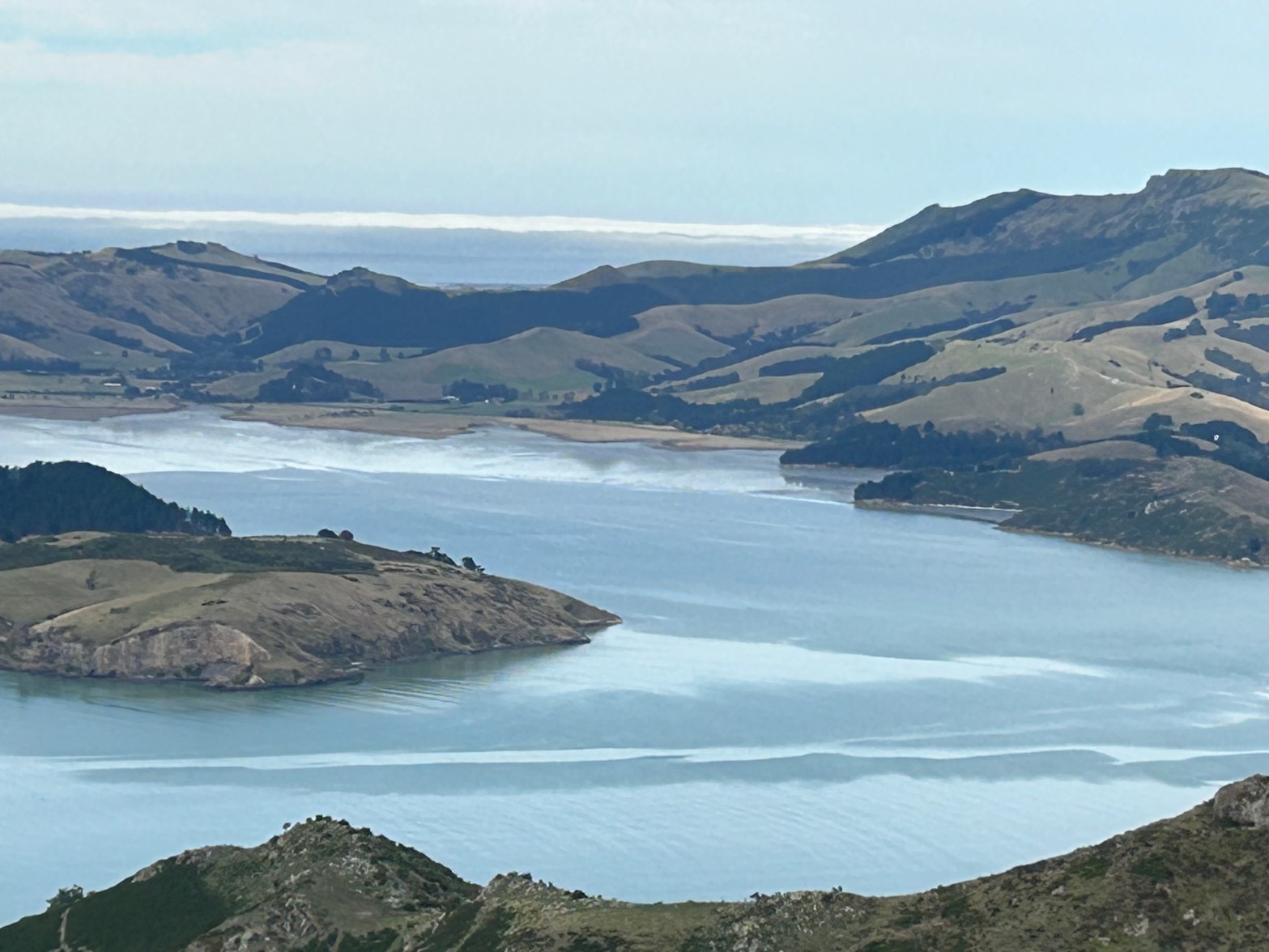
Website photo: from Gondola lookout Christchurch NZ
The title of the old Tim Finn song has been on repeat in my head lately. Hard to realise it was released in 1983—that’s more than 40 years ago. I was a babe in arms, and my mother sang it as a lullaby. Not really, but … the line popped into my head because of the way the world is currently. We don’t have a fraction too much friction—we have a tsunami of friction. Creating constant disagreement and alarm is a weapon used to make us feel helpless. I, for one, sometimes feel overwhelmed.
I wish for a simpler world. Then wonder if there’s ever been a simpler world?
I’ve come to the conclusion that what I’m desperately missing is a world where fact and fiction are two different things. At its heart, fiction is non-fact. See, simple.
Except it’s more complicated than that, and in this busy world people seem to want simple solutions.
Some things are fiction until they become fact. Take space travel.
History is another tricky area, not because we don’t know certain dates and facts, but because the person telling the story has a particular perspective. This doesn’t make it wrong, it just means parts of the story are untold. For example, for a long time Australian history was told from the perspective of white settlers. I reckon any Indigenous person would have a different perspective. Women’s voices have often been missing in histories, as have those of people without power. That’s why a lot of historians now believe history is a dialogue, rather than a set of uncontested facts. We’re continuing the conversation as we collect new information. That doesn’t minimise the importance of history in helping us understand how to avoid repeating mistakes of the past. It makes the argument for the importance of history stronger.
Popular culture is also interested in history, but sometimes has to dress it up because hey—we’re talking entertainment here. There are numerous examples, but in the vanguard was the 2016 movie, Hidden Figures. It was loosely based on a non-fiction book of the same name by Margot Lee Shetterly, telling the story of three female African-American mathematicians who worked at NASA during the Space Race. It enjoyed commercial acclaim despite questions being asked about its historical and cultural accuracy. It’s described as a drama/history. Fact and fiction intertwined for entertainment—faction.
Fact, fiction, faction.
Lochlan Morrissey argued in The Conversation, October 5, 2017 that the use of facts in politics has always been contestable.
“Political propositions”, which are directly relevant to the governance of people, are designed to appeal to emotions and beliefs, and so cannot be held to the same scrutiny as scientific propositions.
Essentially the argument is that feelings and intuition count as evidence for beliefs, and a belief can override all other evidence, including rational or scientific evidence. In fact, reason may be irrelevant to changing a belief because emotion plays a huge part.
Kellyanne Conway used the phrase “alternative facts” in January 2017 to explain why Sean Spicer told a national and international audience Trump’s was the largest presidential inauguration in history. All rational, scientific evidence said this was not true. So, essentially Kellyanne was offering a political proposition, not a fact, consistent with Steve Bannon’s belief that “flooding the zone with s***” is good political strategy as is saying something is true until people ultimately start questioning themselves.
I’m hankering for a world where facts are acknowledged and respected. And one of the few fields where that’s possible is science, where evidence—meticulously collected, checked, peer-reviewed, replicated and tested—is recognised as fact and not dismissed as opinion or belief. Take climate science, which some commentators are trying to tell me is a cult or a religion, whereas science collected over decades proves it’s real.
It’s not only real, it’s impacting our lives and we’re paying for the destruction while fossil fuel companies bank the profits. People are fleeing in terror from fires, floods and other extreme weather events. We’re paying for the damage to our homes and livelihoods through increased insurance costs and taxes to restore public infrastructure. Believing it isn’t happening is endangering the lives of our children and grandchildren.
Time to take a breath here.
I write romance, but I can’t separate who I am from the world I live in. So, I write about people who find trust, passion, loyalty and respect with their partners. I can’t think of a better recipe for a happily-ever-after.
I’ll have copies of my latest release A Just Man—Choosing Family Book 4 (released 18 March) with me at A Romantic Rendezvous in Sydney—23 March 2025. Follow on FaceBook
You can find me and my books here: website FaceBook Instagram
Find me on
- Instagram https://www.instagram.com/romanceauthorjen/
- Facebook – https://www.facebook.com/jenniferrainesauthor
- Goodreads—https://www.goodreads.com/author/show/22577889.Jennifer_Raines
- Bookbub – https://www.bookbub.com/authors/jennifer-raines
- Diana Kathryn Penn’s Indie Reads Aloud podcast has recordings of me reading the opening 20 mins of my books:
- Masquerade—Choosing Family Book 1 (episode 188)
- Lela’s Choice (episode 143)
- Planting Hope (episode 101)
- The Anderson Sisters (episode 54 Taylor’s Law and 80 Grace Under Fire) http://www.dkpwriter.com/indie-reads-aloud-podcast.html
You can also contact me directly via the contact page on my website if you have any other questions.
 Jennifer Raines